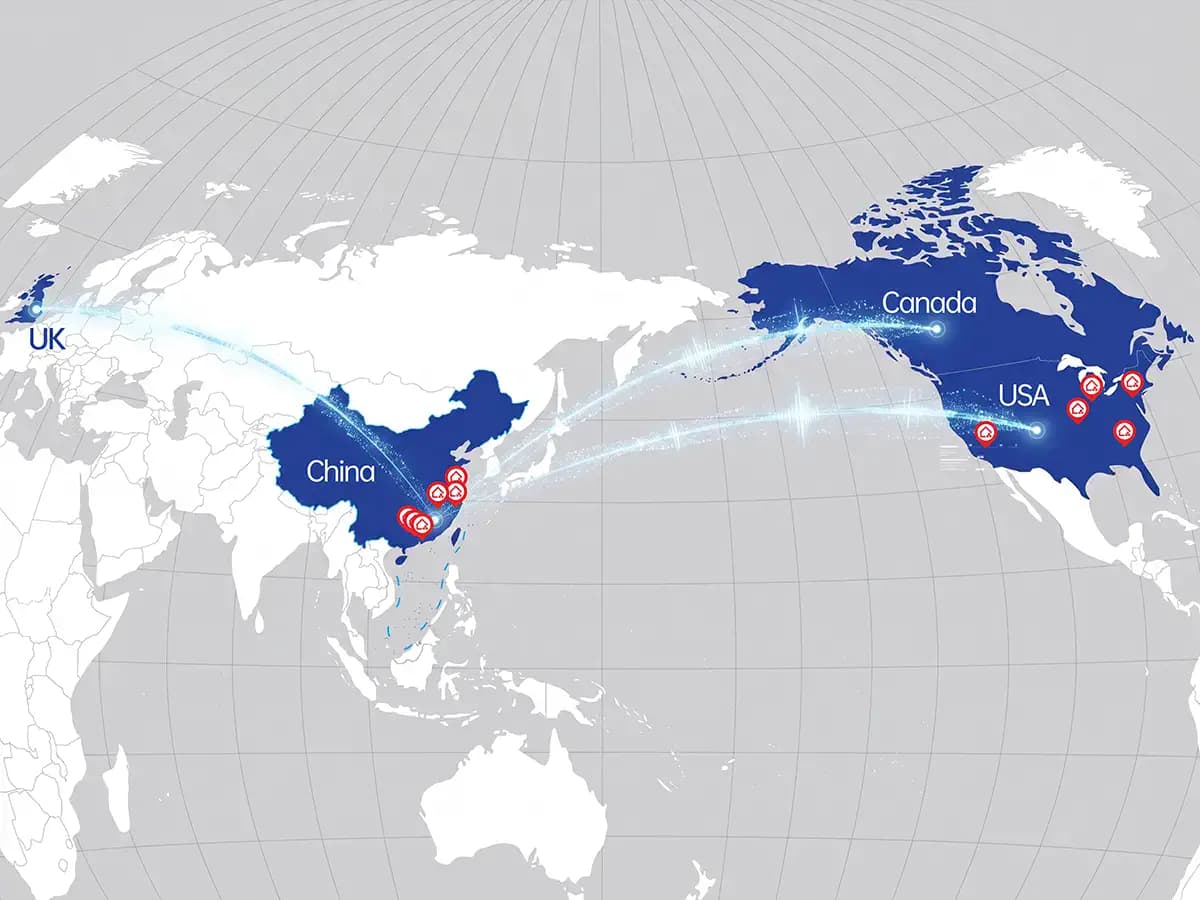
If you’re planning an FBA shipment from China, the wrong first question is “What’s the price per kg?” The better question is: what will this shipment really cost by the time inventory is ready for Amazon’s inbound process? In simple terms, China to Amazon FBA shipping cost is the total inbound cost of getting goods from China into sellable FBA status. A low freight quote can still lead to a high landed cost if duties, clearance, delivery, prep, labeling, or Amazon-side inbound fees sit outside the number you were given.
This page is the cost-focused companion to How to Ship from China to Amazon FBA. It does not cover your full retail pricing model, Amazon referral fees, FBA fulfillment fees, ads, or returns. It focuses on the cost floor from China to FBA — the part sellers most often misread at quote stage.
TL;DR — what it really costs to ship from China to Amazon FBA
China to Amazon FBA shipping cost is not one number. For most sellers, the real landed cost before inventory is available to sell looks more like this:
Main freight + duties/taxes + customs clearance + delivery to the FBA destination + prep/labeling + Amazon-side inbound fees + exception/storage buffer
That is why the cheapest-looking quote is not always the lowest-cost option. A quote can look cheap because it excludes part of the route, leaves duties outside the number, stops short of the final Amazon destination, or leaves out inbound work that still has to happen before stock is usable.
Here are the directional ranges sellers usually use for early budget planning:
| Method | Typical quoting unit | Directional range* | What that usually means |
|---|---|---|---|
| Sea DDP to FBA | per kg | about $1.8–3.2/kg | Lowest landed cost for heavier, planned restocks |
| Air freight / air DDP | per kg | about $4.5–8.5/kg | Faster, but usually much more expensive than sea |
| LCL ocean | per CBM | about $100/CBM | Useful when volume is too small for FCL |
| FCL 40ft | per container | about $3.5k–5.5k | Best unit economics when volume is large enough |
- Directional only and reflective of mid-2026 market conditions (last reviewed June 2026) — not a quote. Real prices move with cargo size, chargeable weight, route, season, destination warehouse, customs conditions, and space availability.
The boundary matters too. This guide is about cost to FBA inbound readiness, not final selling price. In other words, it helps you estimate the cost floor of getting goods from China into Amazon’s network — not your full per-unit margin after referral fees, fulfillment fees, ads, and returns.
Why the headline shipping rate is misleading
Many FBA sellers compare quotes the wrong way. They collect two or three numbers, line them up, and pick the smallest one. The problem is that those numbers often describe different units, different scopes, or different assumptions.
Three mistakes show up again and again:
- Treating different billing bases as if they were the same. One quote may be based on actual weight, another on chargeable weight, another on CBM, and another on a full-container basis. If you compare them as though they all mean the same thing, you are not really comparing price.
- Ignoring volumetric logic. Light, bulky cargo can be billed on volume rather than scale weight, and different carriers or channels can use different volumetric rules. If you don’t understand that, you can “win” a cheap quote and still lose on the final invoice.
- Comparing freight numbers without comparing scope. A quote that excludes duties, customs clearance, last-mile delivery, appointment handling, or Amazon-side inbound work may look cheaper than one that includes them — until you add the missing pieces back in.
The safest way to compare quotes is to run two checks before you look at the number:
1) Compare the unit
Ask what the price is actually tied to:
- per kg
- per chargeable kg
- per CBM
- per carton
- per container
Without that, “$2.40” and “$5.80” tell you almost nothing.
2) Compare the scope
Ask which steps are inside the quote and which are not:
- pickup in China
- export handling
- main freight
- import customs clearance
- duties/taxes
- delivery to the final Amazon destination
- appointment handling
- prep / labeling / relabeling
- exception handling such as waiting, re-delivery, or route changes
The right question is not “Which quote is cheaper?” It is “Which quote gets the same shipment to the same Amazon destination with the lower real landed cost?”
That shift in thinking matters because shipping cost for FBA is not just a transport number. It is part of your inventory cost floor. If you compare the wrong unit or the wrong scope, your landed cost model will be wrong before the shipment even leaves China.
How sea, air, and express quotes are usually priced
Different shipping methods are usually quoted in different ways — and they sit at different points on the cost-versus-speed tradeoff.
| Method | Common quoting unit | Relative cost level | Main cost caution |
|---|---|---|---|
| Sea DDP to FBA | per kg | lower | scope can vary at the destination side |
| LCL ocean | per CBM | medium | destination charges can change the true landed cost |
| FCL ocean | per container | low unit cost at scale | only efficient when volume is high enough |
| Air freight / air DDP | per kg | higher | volumetric weight can push billed weight up quickly |
| Express courier | per kg | highest | fastest, but usually the highest unit cost |
The practical point is simple: sea usually sets the lower transport-cost baseline for heavier or larger replenishment, air carries a higher freight premium, and express is usually the highest per-unit cost.
But a low headline rate does not guarantee the lowest landed cost. LCL can look inexpensive per CBM, then lose its edge once destination handling and delivery are added back in. Air can look expensive per kg, while the real swing factor is whether you are billed on actual or volumetric weight. And two sea DDP quotes can sit in the same low band yet differ sharply in destination scope. The goal is to compare modes on how each is actually priced, not on the headline number alone.
What makes one FBA shipment cost more than another
Even when two shipments look similar on paper, their landed cost can move apart quickly. In real quote comparisons, the biggest gaps usually come from four variables.
1) Chargeable weight and packaging shape
For many shipments, the most important number is not the scale weight but the billed weight. If a carton is light but bulky, carriers may price it on volume rather than actual weight. That is why a small change in carton dimensions, empty space, or bulging packaging can move a shipment into a more expensive billing result.
This is one of the easiest places to misread a quote. Two forwarders may sound close on price, but if one is billing a higher chargeable weight because of packaging shape or remeasurement, the final gap can widen fast.
The practical takeaway is simple: dimension discipline matters. If you do not know the packed size, you do not yet know the real shipping cost.
2) Channel and urgency
Mode is only one layer. The real price also depends on how fast the shipment needs to move and what channel sits behind the quote. A standard ocean move, an LCL shipment, an air DDP lane, and an express courier service solve different timing problems — and price those problems differently.
Urgency usually creates hidden cost pressure in two ways:
- you may need to move into a faster channel
- you may lose flexibility on routing, consolidation, or booking timing
So the same product can carry a very different cost floor in a planned replenishment versus an urgent stockout bridge.
3) Destination warehouse, split logic, and last-mile complexity
The Amazon destination matters more than many sellers expect. Costs can change based on where inventory is going, whether the shipment stays more consolidated or is split more widely, and how the final delivery leg is structured.
For example, the same origin shipment can price differently if:
- the final inbound destination is farther inland
- the inventory is split across more locations
- the shipment needs additional coordination before final handoff
That is one reason a quote should never be judged only on the main freight line. Final delivery structure can change the landed result materially.
Sellers also describe a timing dimension that pure freight quotes miss. More consolidated inbound plans can be slower to check in and shelve, while more distributed placement may clear faster but pushes more delivery cost and coordination onto you. Inventory can also be transshipped between facilities after arrival, which can quietly erode the speed you paid for — for example when an urgent air shipment is still moved to another region before it is shelved.
4) Scope and exception risk
Some quotes are expensive because the route is expensive. Others are expensive because they include more of the route. And some only look cheap because they leave too much out — usually the same gaps flagged earlier: customs clearance, duties, final delivery, appointment handling, prep/relabeling, and exception events like waiting time, re-delivery, route changes, or rejected handoff.
This is where low-rate quotes often turn into high-cost shipments. If the exception triggers are not clear, you are not comparing a finished landed number — you are comparing an incomplete starting point.
Taken together, those four variables explain most of the quote gaps sellers see in practice. If you want a quick rule, it is this: when cost moves unexpectedly, check chargeable weight first, scope second, and destination complexity third.
Amazon-side costs sellers forget before inventory is received
One of the biggest blind spots in FBA shipping cost planning is that the freight quote is only one part of the inbound story. Before inventory is fully usable inside Amazon’s network, sellers can still face inbound costs that sit outside the main transport number.
Inbound placement and shipment splits
In Send to Amazon, your inbound plan can affect cost before the units are even checked in. A more consolidated inbound plan may carry a higher placement-related cost, while a more distributed plan may reduce or avoid that fee but require you to send inventory to more locations yourself.
Placement is not just an Amazon workflow detail — it is part of landed cost. If you compare two freight quotes without considering how the inbound plan will actually be placed, you can underestimate the true per-unit cost of getting stock sellable.
Prep, labeling, and relabeling now belong in your own cost model
As of January 1, 2026, Amazon no longer offers prep and item labeling services for FBA shipments in the US store. Sellers now need to treat prep and labeling as a cost that must be handled before inventory reaches usable FBA status.
This matters most for shipments that need:
- carton or unit labeling
- poly-bagging or other prep work
- relabeling because of packaging or compliance issues
Some sellers previously treated this as part of Amazon’s downstream process. That assumption no longer works. If prep is required, the labor, time, and coordination belong in your landed-cost model. If prep, labeling, or relabeling is involved, those steps still need to meet Amazon FBA Shipping Requirements.
Receiving friction, appointments, and exception buffer
Inventory is not sellable just because it has arrived near Amazon. There is still a gap between delivered cargo and usable stock, and that gap can create cost. In practice, sellers commonly report that this gap can stretch from a few days to several weeks — longest in peak season or at congested facilities — while units show as delivered or ‘received’ but are still being checked in, transshipped, or waiting to be shelved. Stock that is not yet shelved is not yet earning.
Receiving can also stall before check-in even begins. Amazon’s inbound checks have tightened, and shipments can be held or refused at the door for reasons that are largely preventable at origin:
- blurred, damaged, or duplicated carton labels
- cartons over the weight or size limit, or not meeting prep requirements
- mixed cartons, wrong items, or a SKU/quantity mismatch against the inbound plan
- a missing or expired delivery appointment
- temporary intake limits when a warehouse is congested
- incomplete product compliance or certification paperwork
When this happens, the cost is rarely just lost time. You may pay for relabeling, re-boxing, overseas-warehouse sorting, a new appointment, short-term storage, or a re-route to another facility — all before the inventory becomes sellable. Most of these are far cheaper to prevent than to fix: laminate and place labels correctly, verify box specs, quantities, and SKUs before dispatch, and book appointments early — typically 7–10 days ahead in peak season, with a time buffer.
Common examples include:
- appointment-related coordination
- waiting time before handoff
- re-delivery after a missed or failed delivery attempt
- short-term storage or handling while an issue is being resolved
These items are easy to ignore because they do not always appear in the first quote. That is why experienced sellers keep a small inbound exception buffer inside their cost planning. The goal is not to assume every shipment will have a problem. It is to avoid treating every shipment as though nothing can happen after the truck reaches the last mile.
Duties and taxes in 2026: what changed for FBA sellers
For 2026 planning, the most important change is blunt: the old “low-value, duty-light” shortcut is gone. The US ended duty-free de minimis treatment for China-origin goods on May 2, 2025, and for all countries on August 29, 2025. A China-to-FBA shipment can no longer count on slipping under the old $800 threshold — it is subject to normal customs entry and duty, no matter how the freight is booked.
There is still no single “FBA duty rate.” For China-origin goods, duty is a stack assessed on the customs value, not one blended number:
- Base MFN duty — set by the product’s 10-digit HTS classification (0% for some goods, mid-single-digits for many).
- Section 301 China tariffs — commonly an additional 7.5%–25%, and up to 100% for some categories (e.g. EVs, batteries, and certain medical and metal products).
- Any emergency / “reciprocal” / global surcharge in effect at the time of entry — these have been repeatedly raised, paused, extended, and challenged in court across 2025–2026, so what applies depends on your entry date.
- Standard fees — Merchandise Processing Fee (MPF) and Harbor Maintenance Fee (HMF) on ocean entries.
Two practical consequences for comparing quotes:
- Treat duty as a live input, not a fixed assumption. Look up your exact HTS code with the HTS lookup tool, confirm which measures currently apply to your code and origin, and — for anything material — have a customs broker confirm before you commit inventory.
- Be skeptical of unusually cheap “DDP” quotes. With de minimis gone and the duty stack this high, a DDP rate that looks too good often relies on under-declared value or gray-area clearance — and that risk now sits on you, not the forwarder. If one quote leaves duties outside the number and another wraps them into a DDP structure, normalize both to the same scope before you compare.
The duty layer — not the freight line — is now often the largest single variable in your China-to-FBA landed cost, and it follows the same customs rules that apply to any China-to-USA shipment.
A worked example: why low freight does not always mean low landed cost
Numbers make this clearer than theory. Below are two sellers shipping the same goods to Amazon FBA — same product, same quantity, same chargeable weight. The only difference is the freight quote they accept.
Shared assumptions (illustrative):
- 1,000 units, FOB product cost $6.00/unit = $6,000
- Chargeable weight: 500 kg
- Duty stack: 30% effective on customs value (≈ $1,800) — illustrative only; your real rate depends on your HTS code and the measures in effect, so verify it
- US customs entry + MPF/HMF: $250
- Prep & labeling, now the seller’s responsibility: $0.25/unit = $250
- Amazon inbound placement (minimal split): $300
- Exception buffer: $150
Where the two quotes differ:
- Seller A takes a $1.9/kg quote → $950. But it is port-to-port only: it excludes US drayage, last-mile delivery to the FBA destination, and appointment handling. Seller A pays those separately: +$900.
- Seller B takes a $3.0/kg “to FBA door” quote → $1,500, which already includes drayage, last-mile delivery, and the appointment.
| Cost layer | Seller A (cheap freight) | Seller B (fuller scope) |
|---|---|---|
| Product cost (FOB) | $6,000 | $6,000 |
| Main freight | $950 | $1,500 |
| Drayage + last-mile + appointment | $900 | included |
| Duties / taxes | $1,800 | $1,800 |
| Customs entry + MPF/HMF | $250 | $250 |
| Prep / labeling | $250 | $250 |
| Amazon inbound placement | $300 | $300 |
| Exception buffer | $150 | $150 |
| Total landed | $10,600 | $10,250 |
| Per unit | $10.60 | $10.25 |
Seller A’s headline freight was about 37% cheaper ($950 vs $1,500) — yet Seller A’s landed cost is higher ($10.60 vs $10.25 per unit), because the cheap quote stopped at the US port and pushed drayage, last-mile, and appointment handling back onto the seller. The lesson is not that DDP always wins. It is that “lower freight” only means “lower landed cost” when the two quotes cover the same scope. Until you add the missing layers back in, the cheaper-looking number tells you almost nothing.
How to allocate inbound shipping cost across SKUs
Once the total inbound cost is known, sellers still need to push that number down to the SKU level. The best allocation method depends on how different the products are inside the shipment.
Use chargeable-weight allocation when SKU size and freight profile vary meaningfully. This is usually the most practical method for mixed cartons because it keeps bulky or freight-heavy products from being subsidized by denser ones.
Use quantity allocation when the units are highly standardized — similar size, similar packaging, and similar freight impact.
Use cost-based allocation only when SKU values differ more than their freight footprint does. This can work for shipments where the physical profile is similar across products but the product values are not.
The goal is not perfect precision — it is to avoid treating every unit in a mixed shipment as if it created the same inbound cost.
The quote checklist before you book
Before you approve a shipment, do not ask only for the price. Ask for the billing basis, the scope, and the exception triggers. That is what protects your landed-cost model.
Keep the checklist short. Before booking, confirm these five points:
- What is the billing basis? Actual weight, chargeable weight, volume, carton count, or container basis — and can remeasurement change the final bill?
- What is the route scope? Pickup, export handling, main freight, customs clearance, duties, final delivery, and appointment handling.
- What is outside the quote? Especially prep, labeling, relabeling, or any work needed before inventory is inbound-ready.
- What triggers extra charges? Inspection delay, route change, failed delivery, re-delivery, waiting time, or destination adjustment.
- What is the billing dispute window? When can surcharges still appear, what supports them, and how quickly must they be challenged?
If a forwarder can answer those five questions clearly, you already have a stronger quote than most sellers start with.
FAQ
Is air freight always more expensive than sea freight for FBA?
Usually yes on a freight basis, but the comparison still depends on chargeable weight, shipment size, urgency, and scope. A quote that is cheaper per kg is not automatically cheaper in landed terms.
Is LCL always cheaper than FCL?
No. LCL fits when your volume is too small to fill a container; once you can fill a 20ft or 40ft, FCL usually wins on unit cost. Decide on total landed cost for your real volume, not the per-CBM headline.
Are Amazon fees part of shipping cost?
Not all Amazon fees are shipping cost, but some Amazon-side inbound costs affect the landed cost of getting inventory ready for FBA. Placement-related impact, prep, labeling, and inbound exception handling are the most commonly missed items in FBA cost planning.
Should I calculate by actual weight or volumetric weight?
Check both. Many carriers bill on whichever produces the higher chargeable result, so light, bulky cartons are often priced on volume rather than scale weight.
When should I ask for a live quote instead of using budget ranges?
As soon as the shipment is real enough to price: you know the packed dimensions, weight, cargo type, timing window, and intended Amazon destination structure. Budget ranges are useful for planning, but they are not enough for booking.
Why is my shipment delivered but still not sellable?
Delivery is not the same as check-in. Units can sit in ‘received’ or transshipment status for days to weeks before they are shelved and available to sell, and that gap tends to widen in peak season or at congested facilities.
What if my shipment is held or rejected at the FBA warehouse?
Most holds trace back to preventable origin issues — label, carton-spec, SKU-count, appointment, or compliance problems — and the fix (relabeling, re-sorting, a new appointment, or storage) is added cost before stock is sellable. It is almost always cheaper to prevent at origin than to fix at destination.