DDP destinations
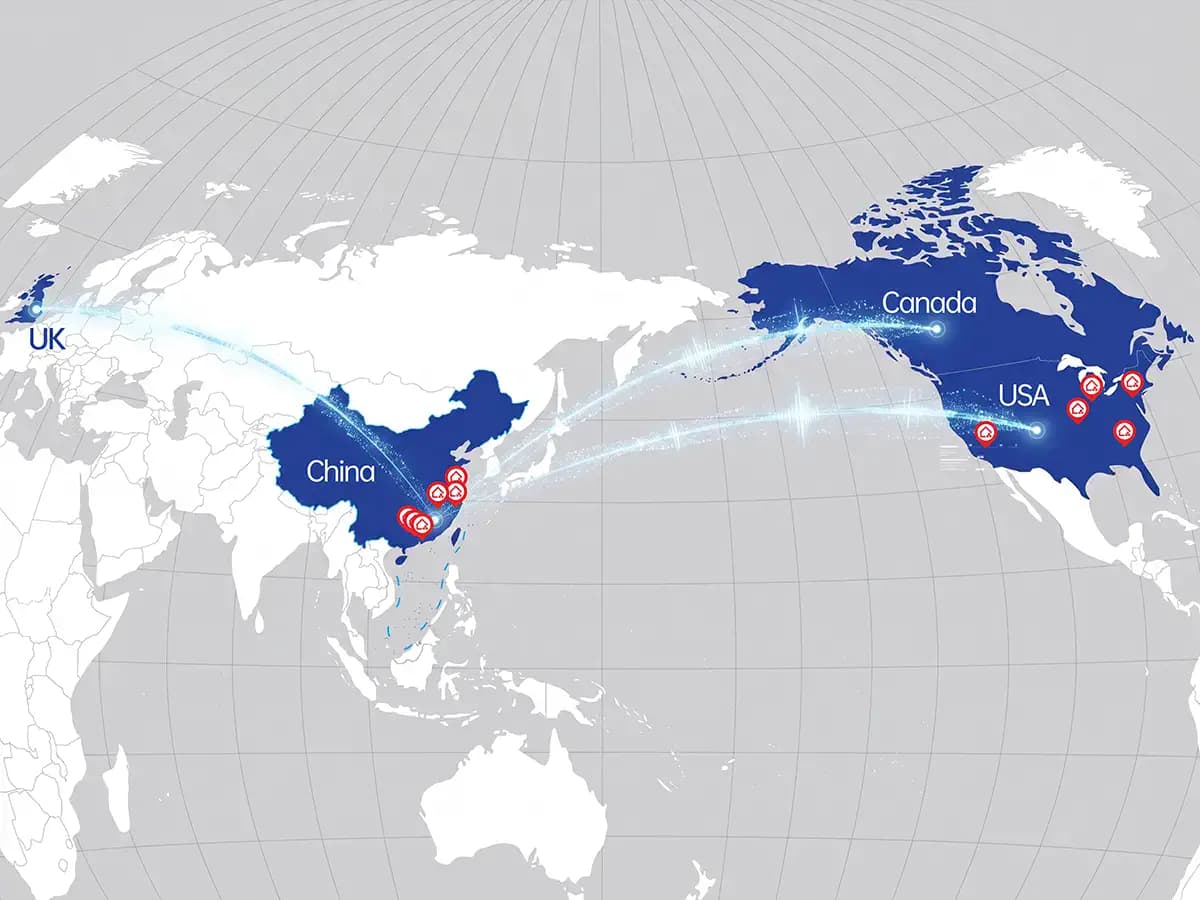
Where We Ship with DDP
Door-to-door DDP shipping from China to the USA, Canada, and the UK. Our core service is ocean freight DDP to the USA, with the route, customs-clearance arrangement, duty and tax assumptions, and final-delivery scope confirmed before booking.
United States
DDP Shipping from China to the USA
Our primary DDP lane, specializing in ocean LCL and FCL shipments. Origin pickup, ocean freight, import clearance, duty and tariff assumptions, and final delivery are defined in one written quote.
Explore China–USA ShippingCanada
DDP Shipping from China to Canada
Door-to-door shipping with CARM and importer setup, GST and duty assumptions, customs-clearance arrangements, and final delivery confirmed before booking.
Explore China–Canada ShippingUnited Kingdom
DDP Shipping from China to the UK
Freight, import clearance, duty and VAT treatment, importer arrangements, and final delivery coordinated under a clearly defined shipment scope.
Explore China–UK Shipping1. What is DDP Shipping from China?
DDP (Delivered Duty Paid) is one of the Incoterms® 2020 trade terms, and in plain terms it’s the most hands-off way to import: the seller under the sales contract — or a DDP freight provider working within the agreed scope — moves your goods the whole way from China to your door. You pay one quoted landed-cost number, and export handling, international freight, import clearance, duties and taxes, and final delivery all sit on the seller / provider side. The one piece that usually stays with you is unloading at the destination, unless the written quote says otherwise.
One thing to be clear about up front: real DDP is not a way to dodge duties. Because a DDP price arrives as a single landed-cost figure, it is sometimes confused with the informal “double-clearance, tax-included” channel some agents sell. They are not the same thing. Genuine DDP is a contractual allocation of cost and risk under Incoterms, with the goods properly declared and the duties and taxes actually paid. The informal channel is where the real problems live — under-declared value, customs paperwork you can never obtain, suspiciously low prices, and liability that lands back on you if anything is later questioned. If a quote only works when the cargo is under-declared, it is not DDP.
What’s in Scope, What to Confirm, What’s Excluded
This is the master scope of a DDP shipment — every cost section, checklist, and case study on this page points back to it. The rule of thumb is simple: if something isn’t in the “Included by default” column, don’t assume it’s covered. Get it confirmed line by line in the written quote before you book.
| Included by default | Often included — confirm in writing | Not included (buyer side) |
|---|---|---|
| China inland trucking from supplier to port/airport | Cargo insurance (all-risk add-on) | Unloading at the buyer’s named destination |
| Export customs clearance and origin documentation | Customs bond (mandatory for USA ocean imports) | Special import permits for regulated goods |
| International air, sea, or rail freight | Last-mile delivery to FBA / fulfillment centers | Customs exam fees and storage on detained cargo |
| Import customs clearance at destination | Destination port accessorials (THC, ISF, DO, chassis days, driver waiting, live-unload) | Failed-delivery / re-delivery fees from incorrect addresses |
| All applicable duties, taxes, and tariff stack (Section 301 etc.) | CARM registration (Canada imports, first-time importers) | Sales tax / VAT reclaim under the buyer’s importer account |
| Final door-to-door delivery to the agreed address | Remote-area delivery surcharges (RAS) | Tax / audit / compliance handling on the buyer’s books |
Country-specific items to confirm in your quote
The scope above holds worldwide — only a handful of import-side items change with the destination. Check these for your route before booking:
| Destination | Extra items to confirm in the quote |
|---|---|
| USA | Customs bond (mandatory for ocean imports), ISF “10+2” filing, Section 301 tariffs |
| Canada | CARM registration (first-time importers), eManifest filing, GST (typically 5%) |
| Other (Europe, Australia, etc.) | Local VAT / GST treatment, destination clearance, and last-mile accessorials confirmed line by line |
Under DDP, risk doesn’t pass to you until the goods reach the named destination. When in doubt, the sales contract and the written DDP quote are the final word — especially on the items that live outside the default scope: unloading, special permits, customs exams, storage, and failed-delivery fees.
2. When Should You Choose DDP?
DDP earns its keep in a few specific situations:
Quick fit check
Best for: buyers who want one coordinated door-to-door plan, predictable landed-cost assumptions, and less direct involvement in customs clearance.
Not best for: buyers who already have their own broker, need to control the importer record directly, require special permits, or want to separate freight, duty, tax, and final delivery contracts.
- E-commerce sellers (Amazon, Shopify, etc.) — you need goods landing straight at an FBA warehouse or your customers, without you ever touching customs clearance.
- Startups and small businesses — you don’t have an Importer of Record or the bandwidth to wrangle international logistics and customs on your own.
- Established brands chasing efficiency — even with an import license, you’d rather hand off the logistics headache and keep your team on sales and marketing.
Note on IOR: DDP doesn’t automatically wipe out your import-compliance role. Clearance still needs an Importer of Record or an authorized declarant, and the exact setup shifts with the country, the shipment type, the broker, and the sales contract. Before booking, nail down who’s named on the entry, what they’ll need from you, and who keeps the import records. If you’re shipping to the U.S., we break down who handles customs, bond, and import responsibility under DDP in a dedicated guide.
- Budget predictability — you want duties, taxes, clearance, and delivery all settled before the cargo moves, not discovered afterward.
- High-value or time-sensitive shipments — when a smooth, well-coordinated delivery with fewer handoffs matters more than shaving off the last dollar, the small premium buys peace of mind.
Why US Importers Especially Rely on DDP
Here’s the counterintuitive part: the buyers who lean on DDP hardest usually aren’t the tiny one-off importers — they’re high-volume but lean US brands, retailers, and Amazon FBA sellers. Moving a lot of volume doesn’t mean you’ve got logistics expertise in-house; plenty of steady, high-volume US buyers depend on DDP more than the occasional small shipper does. They ship real volume, but they still don’t have the headcount, the risk appetite, or the cost-forecasting muscle to run US import themselves. DDP hits four of their pain points dead-on.
1. Predictable landed cost — one fixed price. Under FOB or CIF, the destination side container shipping charges can vary widely: steep terminal handling (THC), out-of-nowhere customs exam fees, and demurrage & detention that pile up when a container sits too long. Add Section 301 tariffs on top and the duty bill gets genuinely hard to predict. A properly scoped DDP quote folds all of it into one delivered-to-warehouse number — so you can lock your landed cost, protect margin, and price with confidence instead of bracing for surprise invoices after arrival.
2. The US clearance bar is high. CBP doesn’t go easy on you: you need Importer of Record (IOR) status, usually a customs bond plus an ISF “10+2” filed before the cargo arrives, and plenty of products also trip FDA, EPA, or CPSC requirements — and since July 8, 2026, CPSC eFiling for regulated products also requires the certificate data itself to be filed electronically with the entry, not just kept on file. Most direct buyers don’t hold those qualifications or know the rules cold, and a single exam or hold gets slow and expensive fast. DDP shifts the clearance workload, the bond, and the broker setup onto the provider side — though an Importer of Record or authorized party is still required, so confirm the entry before booking (see the IOR note above).
3. Risk sits on the seller side until delivery. A long cross-border chain has real exposure baked in — sea delays, lost containers, weather damage, cargo held or seized at the destination port. Under DDP, responsibility for the goods up to the agreed delivery point stays with the seller / provider, so you’re not the one chasing a slow claims process for something that went wrong in transit.
4. Lean teams, not in-house overhead. With other Incoterms, someone on your side has to ride herd on the forwarder, the broker, and the trucker across every handoff — usually a dedicated logistics or import hire. DDP works like a turnkey service, so a lean US team can keep its headcount on marketing, brand, and growth instead of standing up an in-house cross-border logistics function.
When DDP Shipping May Not Be the Best Option
DDP is convenient, but it isn’t the right call for every shipment. Another Incoterm may serve you better if:
- You already have your own customs broker and want full control over import records.
- Your company needs to act as the Importer of Record directly for tax, audit, or compliance reasons.
- Your goods are regulated, restricted, or require special import permits.
- You need formal tax reclaim documentation under your own importer account.
- You want to compare Incoterms like FOB, DAP, and DDP, or port-to-port shipping with separate customs brokerage.
3. What’s in Your DDP Quote — and What Drives the Price
Section 1 laid out the scope of a DDP shipment; this section is about how that scope turns into a priced, auditable quote. A DDP shipping quote bundles a lot into one number, and the table below breaks down what usually sits inside an all-inclusive shipping from China price. Just remember the final scope always has to be confirmed in writing against your cargo, HS code, declared value, pickup address, destination, and delivery needs.
| Cost Component | What It Covers | Typical Share of Total DDP Price |
|---|---|---|
| International Freight | The core sea or air transport cost from China to the destination country. | ~35–55% |
| Duties & Taxes | All applicable import duties and taxes, including Section 301 where it applies, based on the HS code and declared value. | ~10–30% |
| China Origin Charges | Trucking from the supplier’s factory, export handling, commodity inspection, and port entry fees in China. | ~8–15% |
| Destination Port & Customs Clearance | Destination terminal / port charges, ISF filing, customs clearance & brokerage, and any required customs bond. | ~8–12% |
| Last-Mile Delivery | Final trucking from the destination port to your door, warehouse, or FBA address. | ~5–12% |
| Cargo Insurance (optional) | Optional all-risk coverage based on cargo value. | ~1–3% of cargo value |
Your DDP shipping cost is locked in at quotation, with the routine mandatory import charges built in upfront per the confirmed scope. Treat the shares above as a rough reference only — the real split moves with cargo density, HS code, route, and tariff conditions. Where they earn their keep is in comparison: a properly scoped all-in price should clearly account for every component above, not leave you guessing.
For USA ocean imports, the U.S. Customs and Border Protection Importer Security Filing “10+2” rule applies to anything arriving by vessel — and if it’s mishandled, expect penalties, extra inspections, or delays.
DDP Shipping Price Ranges (Industry Reference)
Read the ranges below as rough freight-market benchmarks for sanity-checking a quote — not guaranteed all-in DDP prices. They come before the product-specific duty, tax, customs, insurance, remote-area, and accessorial review, not after. Your real DDP quote rides on cargo type, HS code, declared value, route, season, delivery address, and current tariffs, and it can land outside these bands. These three rows cover the freight layer only — duty, tax, and destination accessorials sit on top. The China-to-USA shipping cost breakdown covers all modes side by side.
| Mode | Benchmark Range Before Duty / Tax Review (USD) | Transit (Door-to-Door) | Best For |
|---|---|---|---|
| Air Express / Air Freight | ~$4–$8 per kg | ~5–12 days | Urgent, small, high-value cargo |
| Ocean Freight LCL (Less than Container Load) | ~$80–$150 per CBM | ~25–45 days door-to-door | Small batches under ~15 CBM |
| FCL 20’/40′ Ocean | ~$2,000–$5,500 per container | ~20–35 days door-to-door | Full-container shipments, stable volume |
Tariff note: Tariffs and trade-remedy measures move, and the duty stack that actually applies depends on HS code, origin, declared value, and the destination rules in force at entry. For China-origin goods into the USA, Section 301 and other product-specific measures may stack on. The DDP-specific question to ask: does the written quote spell out which duty / tax assumptions are baked in, which review date they used, and what happens if customs rules a different rate?
Diagnostic: When a DDP Quote Looks Suspiciously Cheap
A DDP quote that’s noticeably cheaper is usually a narrower scope, not a better rate. The pattern is almost always the same: the freight is quoted cleanly, while the customs bond, last-mile delivery, destination accessorials, CARM, remote-area delivery, or exception fees stay quietly out of the number until the cargo is already moving.
Occasionally the low price isn’t really about your cargo at all — a cheap consolidated slot can be a way to move more sensitive goods (sometimes restricted or infringing items, which tend to carry unusually high margins) in with ordinary freight like yours, which is not something you want your shipment mixed into.
How to diagnose before you commit: ask the provider to itemize anything that isn’t explicitly included. A trustworthy DDP provider answers before booking, not after arrival.
Fast DDP Quote Audit
Think of this as the execution version of the scope table: a quote is only worth anything if it names the import, duty/tax, and door-delivery assumptions in writing. Before you book, run through:
- Duties and taxes are included, with the HS code and declared-value basis stated.
- Importer-of-Record / broker arrangement is confirmed — you know who is named on the customs entry.
- Customs bond or country-specific filing is included where required — for example, ISF plus a customs bond on USA ocean imports.
- Final delivery covers the exact door, warehouse, or FBA address — including residential / driveway delivery where that applies.
- Every accessorial is its own line, not buried under “miscellaneous.” On a properly itemized quote, destination charges such as ISF, AMS, CFS, DDC, PCS, and the DO / delivery fee each appear separately with quantity and unit price.
- The chargeable basis is spelled out. Ocean LCL should state the billed CBM (actual volume rounded up to the charged CBM); air should show actual weight, volumetric weight, and the chargeable weight actually used.
- The quote carries a validity date. Freight and accessorial rates move week to week, so a transparent quote states how long the price holds.
DDP Quote Red Flags
| Red flag | Why it matters | What to ask before booking |
|---|---|---|
| Only one vague “all-in” price | You cannot tell whether duty, tax, clearance, bond, or final delivery is actually included. | Ask for the quote scope by line item. |
| No HS code or declared-value basis | Duty and tax assumptions may be wrong or incomplete. | Ask which HS code and customs value the quote uses. |
| Final delivery described only as “to door” | Warehouse appointment rules, FBA delivery, remote areas, and unloading limits may create add-ons. | Confirm the exact delivery address, appointment rules, and accessorial thresholds. |
| Exception fees not mentioned | Customs exams, storage, failed delivery, and re-delivery are common sources of surprise invoices. | Ask which exceptions are excluded and how they are billed. |
Vetting the provider, not just the quote
Serious buyers check the company behind the quote, not only the numbers in it. Before booking, it’s reasonable to request:
- A valid Chinese business license.
- Freight-forwarding / NVOCC registration — for USA ocean imports, an FMC-registered OTI / NVOCC; for other destinations, the local equivalent.
- The named destination customs-clearance partner — for Canada, a CBSA-licensed customs broker.
- A sample Bill of Lading or Air Waybill from a past shipment on your lane, with the other party’s details redacted.
- Written confirmation of cargo-insurance coverage.
A provider that answers these quickly and in writing is signaling both legitimacy and real operating capability.
Comparing DDP quotes from China?
Send us your packing list and route details, and we’ll send back a written DDP quote that spells out freight, customs clearance, duty/tax assumptions, last-mile scope, and every accessorial to confirm.
4. DDP Delivery Timeline: Where Delays Usually Happen
Rather than rehash generic China route tables, this DDP timeline zeroes in on the points that decide whether a door-to-door shipment actually stays all-inclusive and on schedule.
| DDP Stage | What Can Delay It | How We Reduce the Risk |
|---|---|---|
| Supplier pickup in China | Goods not ready, inaccurate carton data, factory pickup restrictions | Confirm pickup address, carton count, gross weight, CBM, and loading access before dispatch |
| Document and HS code review | Vague product names, wrong declared value, missing material or usage details | Review invoice, packing list, product description, material, use, and HS code before booking |
| Export and international transit | Carrier schedule changes, capacity limits, customs inspection, port or airport congestion | Select a suitable air, sea, rail, or truck route based on cargo urgency, value, and destination |
| Import clearance and duty payment | IOR questions, tariff changes, customs exams, missing compliance documents | Clarify who handles import entry, duty payment, customs bond, and product-specific documents |
| Final delivery | Warehouse appointment rules, remote-area fees, failed delivery, unloading limits | Confirm delivery address, contact person, appointment requirements, and access limits in advance |
Timing note: door-to-door timing still comes down to the confirmed route and destination.
If your shipment gets pulled for a customs exam: an inspection isn’t an accusation. Cargo gets picked at random, or flagged because of something else riding in the same container or consolidation — not because of anything you did. No forwarder can override a customs decision, so what actually matters is the handling: we flag the possibility before booking, keep declarations and documents clean so a straightforward entry clears faster, and keep you posted at each step instead of leaving you to chase the status.
5. Real-World Case Studies: DDP Shipping in Action
To show how DDP actually plays out, here are three anonymized My Everocean shipments — different cargo, different headaches. Treat them as operational examples, not guaranteed pricing, duty, or delivery outcomes; the real requirements always come down to the confirmed HS code, cargo value, route, customs review, and delivery conditions.
Case 1: Outdoor Furniture (Concrete-Top Tables + Seating) — Ningbo to Florida, USA
- Product: Outdoor furniture set (concrete-top tables + seating frames)
- Route: Ningbo → Florida, USA (Southeast region)
- Mode: LCL Ocean Freight
- Transit: ~50–60 days door-to-door
- Total DDP All-In Cost: ~USD 3,000 (door-to-door reference figure from an anonymized completed shipment handled by our team; varies by CBM, value, and current tariff conditions)
This one had two components sitting under different HS codes — the concrete/cement parts and the seating frames — each with its own duty rate under Section 301. Get that dual classification wrong and the whole shipment risks a customs hold.
What the DDP quote covered:
| Category | Line Items |
|---|---|
| China Local Charges | Factory pickup (to Ningbo warehouse) + Commodity Inspection |
| Ocean Freight | LCL rate × actual CBM |
| USA Import Charges | ISF Filing + Customs Clearance + Duty & Tax (both HS codes) |
| Final Delivery | Door delivery to Southeast USA (Florida) |
Key takeaway: mixed-material furniture often forces multi-code classification. Misclassify the concrete component and the duty math comes out wrong — sorting it upfront through a fully scoped DDP quote is what kept surprise charges off the destination invoice.
Result: the buyer got one coordinated plan covering mixed-material classification, duty calculation, customs clearance, and final delivery.
Case 2: Automotive Tires (FCL 20GP, Single HS Heading) — Qingdao to Ontario, Canada
- Product: New pneumatic rubber tires for motor cars (HS 4011 heading)
- Route: Qingdao → Greater Toronto Area, Ontario, Canada
- Mode: FCL 20GP Ocean Freight + inland trucking
- Transit: ~28–35 days door-to-door
- Total DDP All-In Cost: ~USD 5,300 (door-to-door reference figure from an anonymized completed shipment handled by our team; varies by container utilization, declared value, and current tariff conditions)
Even a clean single-product FCL can spring surprise charges if the final-delivery terms are vague. Here the risk wasn’t classification at all — it was chassis time, driver waiting, live-unload hours, prepull, and yard storage.
What the DDP quote covered:
| Category | Line Items |
|---|---|
| Basic Ocean Freight | 20GP ocean freight + Destination DO Fee |
| Canada Import Charges | Import security filing + Handling Fee + Customs Clearance + EMF (Emergency / Bunker Adjustment) + Duty (at cost, based on declared value and HS rate) |
| Final Delivery Fee | Canada trucking to the Greater Toronto Area, with written thresholds for chassis days, driver waiting, live-unload time, prepull, and yard storage |
Key takeaway: single-product FCL DDP quotes look simple, but the gap between a clean delivery and a $500+ surprise invoice almost always lives in what’s spelled out at the consignee’s door — chassis allowance, waiting and unload thresholds, prepull, yard storage. A trustworthy quote lists those rates upfront instead of burying them in a vague “miscellaneous accessorials” line.
Why accessorial thresholds matter
Picture the same container two ways. A driver arrives for a live-unload, but the warehouse runs long past the free window — with a written waiting / free-time rate, that overage is a known, budgeted line; without one, it comes back as a surprise detention charge, sometimes with chassis and prepull fees stacked on top. Same route, same cargo — the only variable is whether those thresholds were on paper before the box left China.
Result: the buyer got a fixed door-to-door price with every accessorial threshold written in — so a tight unload window or a chassis extension was known and budgeted, not invoiced after the fact.
Case 3: Office Furniture (MDF, FCL 40HQ) — Shenzhen to Greater Toronto Area, Canada
- Product: Office furniture made of wood (MDF / medium-density fiberboard), HS 9403.30.0090
- Route: Shenzhen → Greater Toronto Area, Ontario, Canada
- Buyer profile: Ontario-based B2B office-furniture distributor restocking showroom and project inventory
- Mode: FCL 40HQ Ocean Freight + Canada trucking
- Transit: ~28–35 days door-to-door
- Total DDP All-In Cost: high four-figure USD range, all-inclusive door-to-door (reference figure from an anonymized completed shipment handled by our team; the exact number varies by container utilization, declared customs value, and current tariff conditions)
This 40HQ had two Canada-specific risks: the import-side setup (eManifest, customs clearance, and CARM registration if needed) and the last-mile accessorials at the door. We split those out in the quote so the buyer could see what was routine, what hinged on importer setup, and what would only kick in if delivery conditions changed.
Tariff note: for wooden office furniture, the real import cost often comes more from GST than from duty, depending on the confirmed HS code and current tariff treatment. A useful DDP quote keeps duty assumptions separate from GST / tax assumptions instead of lumping both under one “duty + tax” line.
What the DDP quote covered:
| Category | Line Items |
|---|---|
| Basic Ocean Freight | 40HQ ocean freight + Destination DO Fee |
| Canada Import Charges | eManifest filing + Handling Fee + Customs Clearance + CARM Registration Fee (if needed) + Duty (at cost; HS 9403.30 typically MFN duty-free) + GST 5% on duty-paid customs value |
| Final Delivery Fee | Canada trucking to the Greater Toronto Area, with written thresholds for chassis days, driver waiting, live-unload time, prepull, and yard storage |
Key takeaway: for Canada-bound office furniture, a clean quote rests on three written items — confirmed classification, clear duty/GST assumptions, and a last-mile accessorial rate card. If CARM onboarding is in play, flag it before the vessel sails, not after.
Result: the Ontario distributor got a fixed door-to-door price with the full Canada import compliance stack (eManifest, customs clearance, CARM registration, duty, GST) and every last-mile accessorial threshold written in before the 40HQ left Shenzhen.
Try to Get a DDP Shipping Quote from China
For an accurate door-to-door DDP quote, send us the details below. Don’t worry about self-classifying HS codes — we handle classification from your product information.
| Information to Prepare | Why We Need It |
|---|---|
| Product name, material, and intended use | Confirms HS code classification and duty rate; rules out regulated or restricted goods. |
| Commercial invoice (shipper, consignee, product description, quantity, unit + total value) | Primary customs document — declared value and product descriptions drive duty calculation and landed-cost estimate. |
| Packing list (cartons, gross weight, dimensions L × W × H) | Drives mode selection (air / LCL / FCL / special equipment) and last-mile planning. |
| Pickup address in China + factory contact | Lets us include origin trucking, export handling, and loading-access restrictions. |
| Final delivery address + consignee contact (phone, email, warehouse-appointment rules) | Confirms last-mile cost, FBA / fulfillment-center requirements, unloading limits, and delivery appointment needs. |
| Required delivery timeline | Lets us compare standard, fast ship, air, or time-sensitive options across modes. |
Frequently Asked Questions about DDP Shipping
What does DDP shipping from China usually include?
A properly scoped DDP shipment usually includes China pickup, export handling, international freight, import clearance coordination, duties/taxes based on the confirmed quote assumptions, and final delivery to the agreed address. Unloading, special permits, customs exams, storage, failed delivery, or address changes should be confirmed separately.
Who pays duties and taxes under DDP?
Under DDP terms, duties and taxes are assigned to the seller / provider side and should be included in the written quote. The quote should still state the HS code, declared-value basis, tariff assumptions, and IOR / broker arrangement.
Why is one DDP quote much cheaper than another?
Usually because the quote scope is narrower: duty, bond, destination accessorials, remote delivery, or FBA delivery may be excluded. Ask for a written line-item scope before comparing prices.
Will I pay anything extra after the shipment arrives?
A properly scoped quote should include routine freight, clearance, duties/taxes, and final delivery. Extra charges usually come from exceptions such as customs exams, storage, failed delivery, special permits, or address changes after dispatch.
What information do you need to avoid customs delays?
Send the invoice, packing list, product details, cargo value, carton data, and route details. These support HS code review and reduce customs-hold risk.
Can I use DDP if I do not have a customs broker or Importer of Record?
Often, yes. DDP is built for buyers who do not want to handle import clearance themselves. An Importer of Record or authorized party is still required — see the IOR note in the article for who handles the entry and what buyer information we need before booking.
What usually makes a DDP shipment late?
The timeline table lists the five places DDP shipments usually slip — supplier pickup, document and HS code review, export / international transit, import clearance and duty, and final delivery. Mode matters, but DDP timing is most often won or lost in those five handoffs.
Is DDP suitable for Amazon FBA or warehouse delivery?
Yes — DDP works well for FBA and fulfillment-center deliveries. Confirm FBA labeling requirements, delivery appointment rules, the exact warehouse address, and last-mile scope with your provider before dispatch. FBA has strict delivery windows and labeling standards that need to be written into the quote scope, not assumed.
How do US tariffs affect DDP pricing?
Tariffs can materially change a DDP quote because duties are calculated from the HS code, origin, declared value, and current trade measures at entry. Ask the provider to state which tariff assumptions are included and whether the quote will be adjusted if customs applies a different duty rate.
What should I confirm in writing before accepting a DDP quote?
Confirm the HS code, declared value basis, duty/tax treatment, IOR/broker setup, final delivery address, and accessorial thresholds. If the quote bundles everything into one vague line, ask for the breakdown before booking.
Is there a minimum order size for DDP shipping from China?
No fixed minimum. DDP works for parcel-level air shipments, small LCL batches, full containers, and oversized cargo alike. What changes by size is the most cost-effective mode — air for urgent small shipments, LCL for small batches, FCL for stable container volume, and special equipment such as flat rack for OOG cargo.