Shipping from China to USA

Compare DDP, FOB, ocean, air, and express shipping from China to the USA. See cost ranges, transit times, hidden fees, customs tips, and quote checks.

Get Started

Last updated: May 23, 2026. Shipping rates and policy details change frequently — for current market movements, see our monthly China–USA freight market update.

For most first-time US importers — Shopify and DTC sellers, small retailers, Alibaba buyers — the hardest question is not “what’s the cheapest freight rate from China?” It’s three other questions stacked on top of each other:

  • Which shipping method actually fits this shipment?
  • What does the quote include, and what does it leave out?
  • Which customs charges, duties, or destination fees might show up later?

This guide is written for that decision. It compares DDP, FOB, ocean freight (FCL and LCL), air freight, and express courier from a first-time importer’s perspective. It does not try to be a freight encyclopedia — each shipping method links out to a dedicated guide if you need depth.

Start with three things: shipment size, deadline, and whether you need customs clearance and duties included. The Quick Answer table below points you to the right method from there.


Quick Answer: Best Shipping Method by Shipment Type

Shipment situationBest optionTypical transit timeBest forWatch out for
Samples or parcels under 10 kgExpress courier2–5 daysSamples, documents, urgent small parcelsRetail courier rates, battery/liquid restrictions, remote address surcharges
10–80 kg small cartonsCompare express, air freight, or DDP air3–10 daysSmall eCommerce cartons, trial orders, urgent replenishmentChargeable weight, battery/liquid restrictions, address-type surcharges
45–500 kg urgent cargoAir freight3–10 daysHigh-value or time-sensitive goodsDimensional weight and DG restrictions
1–15 CBM small shipmentLCL ocean22–40 days port-to-portSmall batch ordersDestination CFS and warehouse fees
15+ CBM bulk shipmentFCL ocean18–40 days port-to-portLarger wholesale or retail shipmentsSurcharges, trucking, port delays
First-time importer without brokerDDP door-to-door12–40 daysShopify, DTC, Alibaba buyers, small retailersConfirm duties, customs, and final delivery are included
Experienced importer with US brokerFOB + ocean / airDepends on modeImporters who want cost controlMore coordination work

Not sure which method fits your shipment? Send us your weight, CBM, origin city, destination ZIP code, product type, and target delivery date. We’ll compare DDP, ocean, air, and express options for your specific shipment — and tell you what each quote does and does not include.

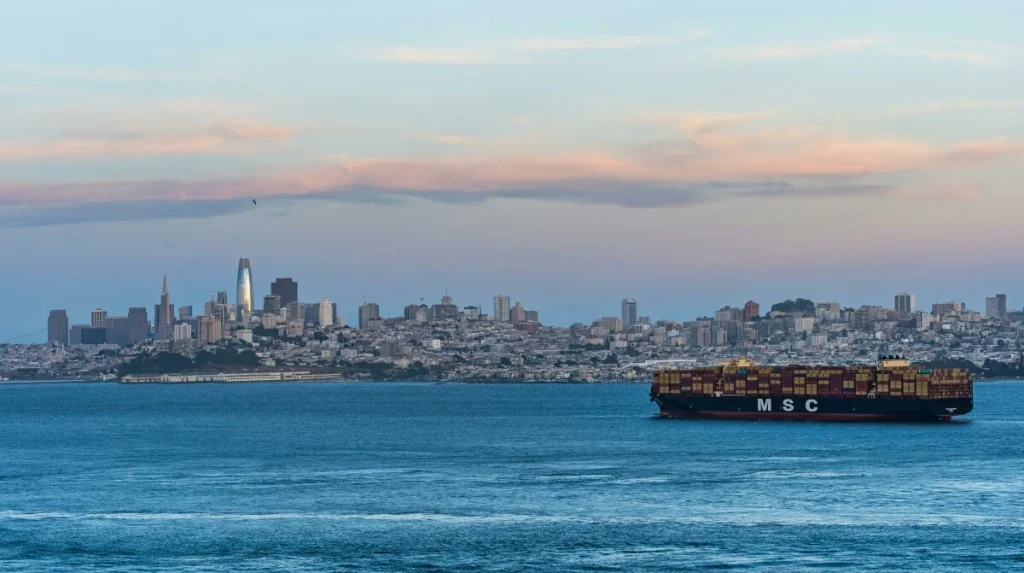
A Vessel Sailing from China to the USA

Not sure which method fits your shipment? Send us your weight, CBM, origin city, destination ZIP code, product type, and target delivery date. We’ll compare DDP, ocean, air, and express options for your specific shipment — and tell you what each quote does and does not include.


Base Freight vs All-In Landed Cost

A freight quote can mean two very different things:

  • Base freight is the transport charge only — usually port-to-port, airport-to-airport, or warehouse-to-warehouse.
  • All-in landed cost is the cost to get goods to your door, 3PL, or Amazon FBA handoff, including freight plus the customs, duty, destination, and delivery items explicitly included in the quote.

Before comparing prices, confirm both quotes cover the same scope. A port-to-port ocean rate and a door-to-door DDP rate are not directly comparable.


Shipping Cost from China to USA: What Affects the Price?

Shipping costs from China to the USA change too often to treat any online rate table as a fixed quote. Use the ranges below as broad public market anchors, not binding prices. The actual number depends on your shipment size, chargeable weight, origin city, destination ZIP code, product type, HS code, duties, delivery address type, and seasonality.

ModeCommon pricing unitBroad public market rangeBest use caseWhat can change the final cost
Express courierPer kgOften around $5–$12/kgSamples, documents, small urgent parcelsRetail courier rate, battery / liquid restrictions, remote address fees
Air freightPer chargeable kgOften around $4–$8/kg for general air cargo; expedited or restricted cargo can be higherUrgent 45–500 kg shipmentsDimensional weight, fuel surcharge, security surcharge, DG approval, destination delivery
LCL oceanPer CBM or per kgOften quoted around $100–$150/CBM or roughly $1–$4/kg depending on scope1–15 CBM small batch shipmentsDestination CFS, deconsolidation, warehouse handling, customs entry, storage, final delivery
FCL oceanPer 20ft / 40ft containerOften several thousand dollars per container; public examples range roughly $1,800–$8,000 depending on route, container size, and market15+ CBM or repeat bulk shipmentsPort pair, carrier capacity, peak season, drayage, chassis, demurrage, final delivery
DDP door-to-doorPer kg, per CBM, or per shipmentIn 2025–2026, public DDP examples often range from about $4–$11/kg for air, and roughly $1.8–$3.5/kg-equivalent for sea LCL (LCL is typically priced per CBM; per-kg is a forwarder shorthand that depends on cargo density)First-time importers who need freight, customs, duty handling, and delivery coordinated togetherWhether duties, customs entry, MPF/HMF, final delivery, FBA / 3PL appointment, and address surcharges are truly included

The important point is not the exact public range — it is the pricing unit and scope. A $2/kg ocean DDP quote, a $120/CBM LCL quote, and a $3,000 container quote may all describe different pieces of the shipping chain.

For an actual quote, prepare your weight, CBM, carton dimensions, origin city, destination ZIP code, product type, HS code if known, delivery address type, and target delivery date.


Shipping Methods Compared: DDP, FOB, Ocean, Air, and Express

There are five practical paths from a Chinese supplier to a US destination. Use this section as a decision hub: choose the likely method here, then open the dedicated guide when you need deeper steps, documents, pricing structure, or risk controls.

MethodUse it whenBe careful when
DDP door-to-doorYou are a first-time importer, do not have a US broker yet, or want freight, customs coordination, duty handling, and final delivery managed together.You need duty audit transparency, ship high-volume FCL regularly, or sell regulated products that need FDA / FCC / CPSC / CARB / EPA / DOT / USDA documents.
FOB shippingYou already have a US broker, customs bond, ISF filer, and trucker, and want more control over the import chain.This is your first shipment, the order is small, or the product is documentation-heavy.
Ocean freight: FCL / LCLThe cargo is not urgent and cost per unit matters more than speed.The shipment is below about 1 CBM, the deadline is tight, or destination CFS / warehouse / delivery fees are not itemized.
Air freightThe shipment is time-sensitive, high-value, or roughly 45–500 kg.The goods are bulky, low-value, or restricted by battery / DG rules.
Express courierYou are shipping samples, documents, replacement parts, or urgent parcels under about 10 kg.The shipment approaches 50–80 kg, includes batteries / liquids / magnets, or goes to a remote / residential address.

These thresholds are planning rules, not hard cutoffs. Dimensions, ZIP code, cargo restrictions, courier account pricing, and delivery address type can move the crossover point. For first-time importers, the safest next step is to compare DDP, FOB + broker, ocean, air, and express on the same door-to-door scope before choosing.

A Note on EXW: Why It Looks Cheapest and Usually Is Not

EXW makes the supplier responsible only for making goods available at the factory. Everything after that — pickup, export clearance, origin handling, freight, import customs, duties, and delivery — shifts to you. For most first-time importers, avoid EXW; ask for FOB at minimum, then compare against DDP.


Why DDP Is Often the Easiest Option for First-Time Importers

For most first-time US importers — Shopify and DTC sellers, small retailers, Alibaba buyers without a customs broker — DDP (Delivered Duty Paid) is often the cleanest way to get goods from a Chinese supplier to a US warehouse without coordinating four or five separate vendors.

That coordination value is the point of DDP. It is not always the cheapest option, and it is rarely the most transparent on duty math, but it reduces the number of separate vendors a first-time importer has to manage.

Who DDP Is Best For

DDP is the right starting point when two or more of the following describe your shipment:

  • No US customs broker, ISF filer, or trucker contact yet. First-time importers usually do not have these set up — DDP fills the gap on day one.
  • Sourcing from Alibaba suppliers who can handle origin export but cannot, and should not, act as your US importer of record.
  • Sending to a US 3PL that needs appointment scheduling, label correction, and palletization handled before FBA hand-off.
  • Moving 1–15 CBM at a time and you would rather pay one consolidated invoice than seven separate ones.

Even when your forwarder offers “direct to Amazon FBA from China,” routing through a US 3PL warehouse first is usually safer for first-time importers, because it buffers FBA appointment delays, label corrections, and rejected pallets. For the full direct-to-FBA vs buffer decision, see How to Ship from China to Amazon FBA.

When DDP May Not Be the Best Fit

DDP may not be the best fit for:

  • High, stable monthly volume. Once you ship enough to negotiate FOB / FCL contracts directly, bundled DDP usually costs more than running your own customs entry.
  • AD/CVD-listed or regulated product categories. DDP does not change duty exposure and does not replace product registration / certification. The AD/CVD examples and the full compliance boundary live in the Customs section below.
  • Duty audit transparency for accounting or transfer-pricing review.

A useful self-test: if you can answer “Who is the legal Importer of Record for this shipment?” without flinching, FOB is on the table. If that question makes you nervous, start with DDP.

The IOR Reality Most Small Sellers Do Not Know About

Many first-time importers — especially Shopify sellers buying from Alibaba — do not have a US Importer of Record set up at all. That gap is exactly why DDP exists as a practical option.

But DDP does not automatically solve the legal importer question. Before booking, confirm who will be named as the Importer of Record on the US customs entry, whose bond or identification will be used, and who is responsible if CBP requests product-specific compliance documents. For regulated products (FDA, FCC, CPSC, CARB, EPA, DOT, Lacey, USDA), the buyer or a designated entity may still carry product-compliance responsibility even when the forwarder coordinates freight, entry, and delivery under DDP terms.

Low-value parcels now need more formal customs planning than many first-time sellers expect.

What DDP Does Not Protect You From: Destination-Side Control Risk

DDP bundles freight, customs coordination, duty handling, and last-mile delivery under one provider. That bundling is exactly why DDP is useful for first-time importers — but it also means the same provider may control the cargo, invoice, destination warehouse handoff, and delivery release.

The practical risk is not that DDP is “bad.” The risk is that your quote may not clearly define what happens after arrival in the US. If destination storage, warehouse operator, appointment scheduling, dispute handling, or delivery release rules are vague, a small delay can become expensive quickly.

Before booking, confirm these points in writing:

  • Destination warehouse operator — who legally operates the warehouse, and whose name appears on storage or handling invoices?
  • Free-time window — how many free days you get, what event starts the storage clock, and the per-day storage rate after free time ends.
  • Arrival notification policy — how and when you will be notified that cargo has arrived or is ready for delivery.
  • Dispute boundary — whether a disagreement on one shipment, invoice, damage claim, or documentation issue can affect release of a different shipment.
  • US-side contact — who can actually resolve delivery, storage, appointment, or POD issues during US business hours.

This is not a reason to avoid DDP. It is a reason to choose the DDP forwarder as carefully as you choose the DDP terms.


Ocean Freight from China to USA: FCL vs LCL

For non-urgent cargo over about 1 CBM, ocean is the default. The two paths inside ocean — Full Container Load (FCL) and Less than Container Load (LCL) — are not just “big vs small box.” They have different cost structures, different surprise-zone fees, and very different rules for when a low headline rate stays cheap end-to-end.

When to Use FCL

FCL makes sense when:

  • You have 15+ CBM or close to it. A 20-foot container holds about 28–33 CBM of mixed cargo; a 40-foot holds about 58–66 CBM. Around 15 CBM is where LCL’s per-CBM cost (including destination handling) typically catches up with the all-in cost of a partially-filled FCL container.
  • You want fewer handoffs. FCL goes supplier → port → destination port → your door without being opened or merged with other shippers’ goods.
  • You ship the same product line repeatedly and want consistent transit time and packing predictability.

FCL is typically cheaper per unit at higher volumes, but the headline cost is only the start. Surcharges (BAF, PSS, peak season), drayage, chassis days, and destination port congestion all affect the final number.

When to Use LCL

LCL is the right call when:

  • Your shipment is 1–15 CBM — too big for air to be economical, too small to fill a container.
  • You are running a first trial order and do not yet know what your monthly volume will look like.
  • You can absorb a slower transit because your cargo goes through consolidation at origin and deconsolidation at destination.

LCL is also where most first-time importers get burned. The per-CBM rate at origin is rarely the number that decides total landed cost.

Why Cheap LCL Quotes Can Become Expensive

Based on our shipping operations, the gap between two LCL quotes that look “the same” usually does not come from the ocean freight line. It comes from everything that happens after the container reaches the US destination port — and from how your cargo was packed before it ever left China.

The full LCL cost stack includes:

  1. Origin CFS handling — consolidation, palletizing if needed, export documentation.
  2. Ocean freight per CBM — this is the only line most quotes lead with.
  3. Destination CFS deconsolidation — your goods are pulled out of the shared container.
  4. Destination warehouse handling — sorting and re-palletizing for last-mile pickup or delivery.
  5. Customs entry — single LCL shipments still need their own ISF and entry filed.
  6. Drayage / chassis — even if your LCL does not fill a chassis on its own, the destination still bills part of one.
  7. Last-mile delivery — to your door, 3PL, or warehouse.
  8. Storage — if you do not pick up or deliver the cargo within the free-time window, per-day storage starts adding up.

Two LCL quotes can show the same ocean freight per-CBM rate and land at very different totals because items 3–8 are negotiated separately by each forwarder. Ask for the itemized quote, not just the headline per-CBM number.

The packaging trap that no quote will warn you about:

  • Wood-packaging non-compliance — pallets, crates, and dunnage entering the US generally need to meet IPPC ISPM 15 treatment standards. Raw, unmarked wood gets flagged; in the worst case, the entire shipment is refused entry or fumigated at your cost.
  • Plywood / MDF / engineered-wood substitution — these are usually compliant under ISPM 15 because they are processed wood, but only if your packaging vendor labels them correctly on the packing list.
  • Pallets that cannot be moved end-to-end — US warehouses expect four-way-entry pallets as standard. Two-way pallets get re-palletized at destination, billed at the warehouse’s hourly rate.

Confirm with your forwarder before the supplier packs, not after the cargo arrives.

One more thing most first-time LCL importers learn the hard way: LCL quotes are not always directly comparable. Not because forwarders are dishonest, but because LCL pricing for small-volume shippers is not built on a public rate card. The appointed forwarder controls origin handling, ocean freight, and destination CFS as a bundled position, and small shippers usually do not have the monthly volume to negotiate against it.

What you can still demand:

  • An itemized quote — even if you cannot move the totals, you can see which line items exist and which ones the forwarder is silent on.
  • The destination free-time window in writing — number of free days, what triggers storage, per-day storage rate, and arrival notification policy.
  • A specific destination warehouse name, not just “our overseas warehouse.”
  • Explicit handling of address-type surcharges — residential, remote, liftgate, inside delivery.

If you ship LCL repeatedly and the appointed forwarder’s pricing keeps coming in higher than alternatives, the path forward is usually not “hunt for a better LCL forwarder” — it is moving to FOB plus your own US-side broker and trucker, so the destination chain is no longer bundled inside someone else’s quote.

Port-to-Port vs Door-to-Door Ocean Shipping

A “port-to-port” ocean quote ends when the cargo is discharged at the US destination port. It does not include the trucking, the warehouse, the appointment, or the residential delivery.

Published ocean transit times — typically 18–35 days to US West Coast and 25–40 days to US East Coast — are port-to-port ranges, not guaranteed door-to-door delivery times. In peak season (Q3 ocean, Q4 air, the Lunar New Year buffer), build a buffer of 5–10 extra days into your planning.

For deeper FCL routes, ports, container size, and rate structure, use the dedicated ocean freight guide linked earlier in this section.


Air Freight and Express: When Speed Is Worth the Cost

Air freight and express courier both move goods from China to the US in a fraction of the time ocean takes, and both cost more per kilogram than ocean by a wide margin. For first-time importers, the cleanest way to think about it is stockout cost versus freight premium: if a delay would cost you a stocked-out listing, a missed seasonal launch, or a higher-priced rush replacement order, air or express usually wins. If the cargo can wait, ocean usually wins.

When to Choose Air Freight

Air freight is most economical in the 45–500 kg range. Between 10–80 kg, compare against express courier rates carefully — express usually wins below ~50 kg, air wins above ~80 kg, and 50–80 kg depends on dimensions and destination.

Choose air freight for:

  • 45–500 kg shipments that are too small to justify FCL ocean and too large to make express economical.
  • Urgent restocks where the warehouse is running thin and a 30-day ocean transit would mean stockout.
  • High-value goods where freight cost as a share of cargo value is low.
  • Seasonal launches with hard on-shelf dates.

When to Choose Express Courier

Choose express courier for:

  • Samples — supplier-to-buyer evaluation shipments before placing a full order.
  • Documents — contracts, customs paperwork, original certificates.
  • Replacement parts — small items needed urgently to fix a larger problem.
  • Parcels under 10 kg where retail or forwarder-discounted express rates beat air freight once airport handling and last-mile are added.

Above roughly 50–80 kg, depending on dimensions and destination, air freight typically becomes cheaper per kilogram than express.

Watch Dimensional Weight

Air and express both bill against chargeable weight, which is the higher of actual weight and dimensional weight. Lightweight bulky goods get charged at dimensional weight, which can be two or three times the actual weight on the scale.

Before requesting an air or express quote, give your forwarder the length × width × height of each carton in centimeters, not just the total CBM. Detailed dimensional weight formulas and route-level pricing belong in the dedicated air freight guide linked earlier in this section.

Batteries, DG, and Restricted Cargo

Air freight restrictions are about whether the cargo can be accepted by the airline, not whether the product is legally compliant for sale in the US. Confirm approval before booking when the shipment includes:

  • Lithium batteries — standalone batteries, batteries packed with equipment, and batteries contained in equipment follow different IATA packing instructions and documentation rules.
  • Magnetic products — magnetized material may need testing and packaging before air transport.
  • Liquids, aerosols, and flammable goods — perfumes, alcohol products, paints, sprays, and similar goods may require DG handling and surcharges.
  • Electronics with built-in batteries — carrier approval and correct DG paperwork may be required before pickup.

For these categories, ask the forwarder for the airline acceptance path before goods leave the supplier.


Hidden Fees: What Cheap Shipping Quotes Usually Leave Out

The most expensive mistake first-time importers make is not picking the wrong shipping method. It is comparing two quotes that are not quoting the same scope. A cheap quote is not always dishonest, but it may be incomplete — and “incomplete” only becomes visible after the cargo arrives, when you have no leverage to walk away.

This section turns the main shipping methods into line-by-line quote checklists. Read each as yes/no: every line should be explicitly stated in writing before you accept the quote.

A complete quote should make the missing scope visible. Forwarder behavior and vetting questions are covered in the forwarder section below.

FCL Quote Checklist

Confirm in writing whether each of these is included or excluded:

  • Base ocean freight — origin port to destination port.
  • BAF / PSS / GRI / carrier surcharges — bunker adjustment, peak season, general rate increase.
  • Origin THC — terminal handling at the load port.
  • Destination THC — terminal handling at the discharge port.
  • ISF filing — required 24+ hours before vessel loading for US imports.
  • Customs entry / brokerage — including bond if needed.
  • Duties, MPF, HMF — calculated against the HS code on the entry.
  • Chassis days — typically 1–4 free, then per-day charge.
  • Drayage — port to warehouse trucking.
  • Port congestion / detention / demurrage — what triggers them, who pays.
  • Final delivery — to door, 3PL, FBA inbound, or warehouse address.

LCL Quote Checklist

For LCL, focus on the destination-side items most likely to change the final bill:

  • Destination CFS deconsolidation.
  • Warehouse handling and re-palletizing.
  • Customs entry, ISF, duties, MPF, and HMF.
  • Last-mile delivery and address-type surcharges — residential, remote, liftgate, inside delivery.
  • Free time and storage — number of free days, trigger event, and per-day rate.
  • Re-handling or packaging correction fees.
  • Appointment or delivery requirements for 3PL, FBA, or warehouse addresses.

DDP Quote Checklist

DDP is the method where “all-inclusive” hides the most ambiguity. Each item below should appear with an explicit yes/no on the quote — not a blanket “all-in” line:

  • Pickup from supplier — including dock loading, packing list verification.
  • Export clearance — China-side documentation and declaration.
  • International freight — air, ocean LCL, or FCL.
  • ISF filing — required 24+ hours before vessel loading for ocean.
  • Import customs entry — broker named, IOR confirmed.
  • Customs bond — single-entry vs continuous.
  • Import duties, MPF, HMF — calculated against the HS code on the entry, including any AD/CVD or Section 301 stack.
  • Final delivery — to which address type: door, 3PL, FBA inbound, or residential.
  • FBA / 3PL appointment scheduling.
  • Residential, remote area, liftgate, inside delivery, oversize surcharges.
  • POD (proof of delivery) — included by default, or charged separately.
  • Insurance — included automatically, or add-on.
  • Customs document requests — if Customs asks for additional certificates mid-clearance, what is the process and timeline?
  • Customs exam fees — if the shipment is pulled for inspection, who pays the exam fee and any delay charges?

Air Freight Quote Checklist

Air quotes look cleaner than ocean quotes, which is part of the trap:

  • Chargeable weight — actual vs dimensional, with the formula spelled out.
  • Fuel surcharge — per kg or as a percentage of base rate.
  • Security surcharge — per kg.
  • Pickup from supplier.
  • Customs entry and duties.
  • Delivery from airport — to which address type.
  • Battery / DG / restricted cargo surcharge — if applicable, with carrier approval confirmed.

The goal is not to avoid every cheap quote — it is to make sure every quote is scoped line by line.


Customs, Duties, and Documents: What First-Time Importers Must Check

Customs is where first-time importers lose the most money. Not because the rules are uniquely complex, but because the gap between “my forwarder coordinates customs” and “I am still the legal importer” is invisible until something goes wrong.

If you plan to ship DDP, most of the operational details below are coordinated by your forwarder — but read through anyway to understand where the compliance boundary sits and what you remain legally responsible for as the buyer or named Importer of Record.

Documents Usually Needed

Before shipment, make sure the basic clearance file is ready: commercial invoice, packing list, bill of lading or air waybill, ISF for ocean shipments, customs POA, broker-classified HS code, and product compliance documents when applicable.

Do not self-classify your HS code from a Google search. Give your broker the product name, material composition, intended use, and a clear product photo — let them classify. A wrong HS code on the entry can mean wrong duty, customs hold, or post-entry amendment fees.

Duties Are Based on Product Classification, Not Freight Cost

Import duties depend on four things, in this order:

  1. HS code — the 10-digit HTSUS classification of the product.
  2. Declared value — the price paid to the supplier, usually FOB-equivalent.
  3. Country of origin — where the product was substantially manufactured.
  4. Applicable tariff programs — base MFN duty plus Section 301, Section 232, AD/CVD, and any other special programs in force.

Do not model your landed cost from an old duty rate. Pull the current HTSUS rate from hts.usitc.gov, then confirm with your broker whether Section 301, Section 232, or AD/CVD also apply.

A note on AD/CVD: examples of categories commonly subject to active orders include wooden bedroom furniture, hardwood plywood, aluminum extrusions, passenger vehicle and light truck tires, large residential washers, steel pipe and tube, and various wire, nail, and fastener categories — but this is not a complete list. Current orders should be verified via the Commerce ACCESS AD/CVD Search at access.trade.gov. The USITC import-injury investigation pages at usitc.gov/investigations/import_injury are a useful secondary reference.

Common Customs Mistakes

MistakeLikely consequenceHow to avoid
Vague product description (“electronics,” “household goods”)Customs hold pending classificationSpecific name + material + intended use on the invoice
Wrong HS codeWrong duty assessed; post-entry amendment feesLet your broker classify; do not self-classify
Missing or wrong country-of-origin markingMarking penalty; potential cargo rejection“Made in China” on product or packaging per CBP marking rules
Under-declared valueCustoms penalty and audit riskDeclared value matches the wire transfer to the supplier
Incomplete or late ISFPenalty risk; cargo delayISF filed 24+ hours before vessel loading, with all required data elements
Invoice and packing list mismatchCustoms exam; release delayCross-check carton count, weight, and value before shipment
Missing FDA / FCC / CPSC / EPA documentsCargo hold pending compliance; potential refusal of entrySort registrations and certificates before booking freight
Unclear Importer of RecordCustoms delays; bond issuesConfirm IOR and customs bond before goods ship
Shipping via consignee’s express account without confirming their clearance capacityCargo held pending compliance documents the consignee cannot supply; shipment returned to originConfirm the consignee has a customs broker contact and can respond to document requests within 1–2 business days — or ship DDP from the start

The $800 De Minimis Duty-Free Treatment Is Currently Suspended

For years, the US $800 de minimis exemption under Section 321 allowed many commercial parcels valued at $800 or less to enter with reduced customs formality and no duty.

That treatment is no longer a safe assumption. As of August 29, 2025, duty-free de minimis treatment under Section 321 is suspended for low-value shipments from all countries that would otherwise have qualified, subject to current CBP implementation rules and any later policy updates. For commercial parcels from China, do not treat Section 321 as the default landed-cost fallback.

This section reflects public CBP and White House guidance as of May 2026. Confirm current CBP instructions and broker requirements before relying on a landed-cost model, especially if your parcel program previously depended on de minimis treatment.

What this means in practice:

  • Older landed-cost assumptions may no longer work. Duties, customs entry fees, and MPF can now apply to shipments that previously moved duty-free.
  • A customs entry may be required for low-value commercial parcels that previously relied on de minimis treatment, using the appropriate entry type.
  • Whether freight is part of the duty base depends on the entry scenario. Do not assume without confirming with your broker.

Rebuild your landed-cost model. A spreadsheet built before the suspension that assumed sub-$800 parcels arrived duty-free will systematically understate your true cost in 2025–2026.

CBP’s e-commerce import FAQs and the White House de minimis order are the public references importers should check before relying on a low-value parcel landed-cost model.

DDP Covers Freight and Customs — It Does Not Cover Product Compliance

A DDP quote may cover international freight, customs entry, duty handling, and final delivery. It does not replace product compliance.

If your product is regulated by a US agency, the registration, ID, certificate, or label has to exist before the goods ship.

  • FDA — food, drugs, cosmetics, dietary supplements, medical devices, radiation-emitting electronics.
  • FCC — wireless devices, Bluetooth / WiFi products, and other radio-frequency equipment. These products need the required FCC equipment authorization or import condition; many intentional radiators require an FCC ID.
  • CPSC — children’s products, toys, sleepwear, consumer goods with safety standards.
  • EPA — pesticides, engines, vehicles, refrigerants, chemical products.
  • CARB — composite wood products require CARB Phase 2 compliance.
  • DOT — lithium batteries and other hazardous materials in transit.
  • USDA — wood packaging, plant and animal products, Lacey Act.

A pattern reported across importer communities: an exporter ships goods to a US buyer using the buyer’s own FedEx account, assuming the courier handles clearance. Once the cargo arrives, US Customs requests an aluminum-content certificate and a hazardous-substance compliance document — the kind of paperwork express brokerage typically will not generate on the consignee’s behalf. The buyer has no broker contact, cannot respond in time, and the cargo sits in bonded warehouse before being returned to origin. The shipment then has to be re-sent under a coordinated DDP arrangement.

The lesson is upstream of the freight method: before shipping anything compliance-sensitive via the consignee’s express account, confirm the consignee has a customs broker contact and can respond to CBP document requests within 1–2 business days. If they cannot, ship DDP from the start so a broker is engaged from the outset.

Pre-Shipment Customs Checklist

  • [ ] Product description is specific: name + material + use.
  • [ ] HS code classified by your broker, not self-classified.
  • [ ] Declared value matches the wire transfer to the supplier.
  • [ ] Country of origin marked on product or packaging per CBP rules.
  • [ ] Commercial invoice and packing list cross-checked for consistency.
  • [ ] ISF prepared for ocean shipments.
  • [ ] Product compliance sorted before booking freight.
  • [ ] AD/CVD check completed against Commerce ACCESS for the product category.
  • [ ] Importer of Record confirmed, with customs bond if needed.
  • [ ] DDP scope confirmed line by line if shipping DDP.
  • [ ] Landed-cost model rebuilt against current tariff rates and the de minimis suspension.

The Customs Coordination Boundary

We help coordinate customs clearance, duty handling, and final delivery for DDP shipments, but clearance still depends on accurate product details, HS code information, declared value, and required compliance documents.

A quote that promises around that boundary — “we handle all customs issues” — is making a promise no one in the freight chain can actually keep.


How to Vet a Freight Forwarder

Hidden-fee checklists tell you what should be inside a quote. This section covers how to evaluate the forwarder behind the quote — a different question, and just as important. For first-time importers, the wrong forwarder is more expensive than the wrong shipping method.

Signals a Forwarder Is Worth Quoting With

  • They ask questions before quoting. Address type, package dimensions, packaging method, item count, FBA vs 3PL, ZIP code, product category.
  • They itemize without being asked. Base freight, destination handling, customs entry, duties, last-mile — broken out as line items, not rolled into one number.
  • They can name the importer of record on a DDP entry when you ask.
  • They flag product-specific compliance risks — for example, “your category may require AD/CVD review” — without you raising it first.
  • They have a US-side operations contact, not just an overseas sales rep. Most LCL / DDP problems happen at the destination, not at origin.

Red Flags

  • “All-inclusive” but refuses itemization.
  • “We handle all customs issues.” Customs outcomes still depend on accurate buyer and supplier data.
  • No POA or customs bond conversation for repeat importers.
  • No address-type or appointment questions before quoting last-mile delivery.
  • Quote arrives before the shipment details are complete.
  • Warehouse claim with no operator name. Ask who legally operates the warehouse and whose invoice storage appears on.
  • Free-time terms without a trigger event. Ask what starts the storage clock and how arrival is notified.
  • Unclear cross-shipment boundary. Ask whether a dispute on shipment A can ever delay shipment B.

Pre-Booking Questions to Ask Every Forwarder

  • Who files ISF, and how is the data collected from me?
  • Who is named as the importer of record on the customs entry?
  • What is your free-time window at destination, and what triggers per-day storage?
  • If Customs requests additional documents mid-clearance, what is your process and typical turnaround?
  • If the shipment is pulled for exam, who pays the exam fee and any delay charges?
  • What is your US-side operations contact, and what hours do they cover?
  • Do you have direct contracts with destination CFS / 3PL warehouses, or are you sub-contracting?
  • For DDP: walk me through how duty is calculated against my HS code, and whether Section 301 / 232 / AD/CVD apply.
  • If I have a dispute with you on one shipment — a damage claim, a payment-timing issue, a documentation argument — can it ever delay or hold delivery of a different shipment?
  • Is your US destination warehouse self-operated or partnered with a third-party 3PL?
  • What notification will I receive when cargo arrives so the storage clock does not start without me knowing?

A forwarder who answers these in writing is one you can compare against another forwarder who answers them in writing. A forwarder who deflects is one you do not have enough data on to compare at all.

References and Track Record

  • Ask for two references in your product category — not generic references, category-specific.
  • Ask how long they have handled your destination port / 3PL combination. Forwarders rotate carriers and warehouses; what they did well two years ago is not necessarily what they do today.
  • Verify the broker license. US customs brokers are licensed by CBP; license status is public.
  • Ask what happens when something goes wrong. A forwarder who tells you about a past exam, detention, or warehouse mis-routing — and how they fixed it — is more useful than one who claims a perfect record.

The vetting goal is comparable quotes from comparable forwarders, not the lowest headline number. Two forwarders quoting the same scope, both itemized, both with named IOR and US ops contact — that is a fair comparison. Anything else is guesswork.


Final Takeaway

For most first-time importers, the best shipping method is decided by shipment size, deadline, and customs responsibility:

  • Under 10 kg: start with express courier.
  • 45–500 kg and urgent: compare air freight, express, and DDP air by chargeable weight.
  • 1–15 CBM and not urgent: compare LCL ocean and DDP ocean, but audit destination fees carefully.
  • 15+ CBM or repeat bulk shipments: compare FCL ocean, FOB, and your own broker setup.
  • No US broker or first shipment from Alibaba: start with DDP, audited line by line against the Hidden Fees checklist above.

The cheapest freight rate is rarely the cheapest landed cost.


FAQ

How long does shipping from China to the USA take?

Depends on the method. Typical port-to-port or airport-to-airport ranges: express courier takes 2–5 days, air freight takes 3–10 days, ocean FCL takes 18–35 days to the US West Coast or 25–40 days to the US East Coast, and ocean LCL takes 22–40 days plus deconsolidation. Door-to-door timing adds customs clearance, drayage, warehouse appointments, and last-mile delivery — typically 5–10 extra days, more in peak season.

What is the cheapest way to ship from China to the USA?

Depends on shipment size and what “cheapest” includes. Over about 15 CBM, FCL ocean is usually cheapest per unit. For 1–15 CBM, LCL ocean is cheapest only if destination handling is tightly itemized. Under about 10 kg, forwarder-discounted express usually beats air freight. “Cheapest” depends on total landed cost, not the per-kg or per-CBM headline rate.

How much does shipping from China to the USA cost?

There is no single fixed price. Shipping cost depends on the pricing unit and scope: express and air are usually priced by actual or chargeable weight, LCL ocean by CBM or weight, FCL ocean by container, and DDP by a bundled door-to-door scope. DDP rates can look higher because they may include customs coordination, duties, and final delivery. Always compare landed cost, not just the freight rate.

Do I need a customs broker?

For repeat imports, usually yes — and often a continuous customs bond rather than repeated single-entry bonds. If you ship DDP, your provider may coordinate the broker, but the legal importer name and bond responsibility still need to be clear before goods ship.

What is the difference between FOB and DDP?

Choose FOB if you already have a broker, trucker, and customs bond and want more cost control. Choose DDP if this is your first import and you want one provider to coordinate freight, customs, and delivery.

What happens if my DDP shipment is held by US customs?

Responsibility depends on the agreed DDP quote, the named Importer of Record, the broker arrangement, and the reason for the hold. The forwarder may coordinate the response, but documents CBP asks for — product certifications, mill test reports, FDA / FCC paperwork, country-of-origin declarations — often have to come from you or your supplier. Confirm in advance how fast document requests are routed to you, who pays customs exam fees, who pays storage after free time, and who covers document-correction or delay-related charges.

What happened to the $800 de minimis rule?

Commercial low-value parcels can no longer rely on the old $800 duty-free fallback. If your landed-cost model assumed small shipments moved without duties, customs entry fees, or MPF, rebuild it before quoting or reordering.

Can I ship directly to Amazon FBA from China?

Technically yes, but first-time importers usually should route through a US 3PL first unless labels, appointments, pallet rules, and rejection handling are already under control.

Which import documents do I prepare, and which come from the supplier or forwarder?

A quick split:

  • Supplier provides: commercial invoice, packing list, certificate of origin, and product-specific supporting documents when relevant.
  • Forwarder / carrier generates: bill of lading or air waybill, ISF filing for ocean shipments, arrival notice, and broker-filed customs entry documents.
  • You provide as importer: customs POA, EIN / IRS number, legal Importer of Record details, customs bond, and any product compliance registrations or certificates issued in your name.

The first-time mistake is assuming the supplier or courier can fix buyer-side compliance documents after cargo arrives. Confirm the document owner before booking freight.

Why do LCL quotes from different forwarders seem hard to compare?

Because small-volume LCL pricing is usually bundled. Compare destination charges, free time, warehouse operator, storage terms, and address-type surcharges — not just the per-CBM rate.

Put an experienced China freight forwarder to work for your business

Tell us your shipment needs and we'll help you plan the right solution for US, Canada, or UK imports, with DDP-first support and FOB options when needed.

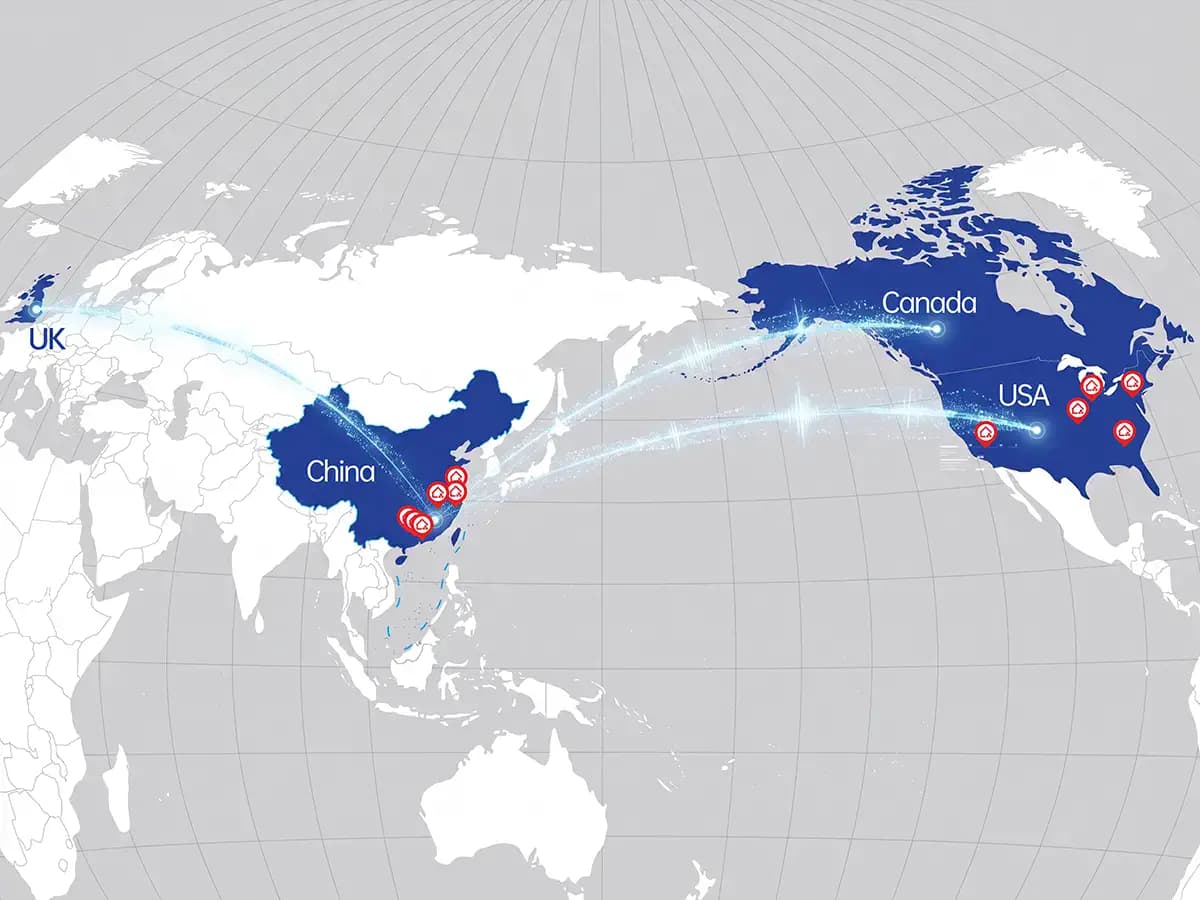
Ever Ocean global shipping network - routes from China to USA, Canada and UK