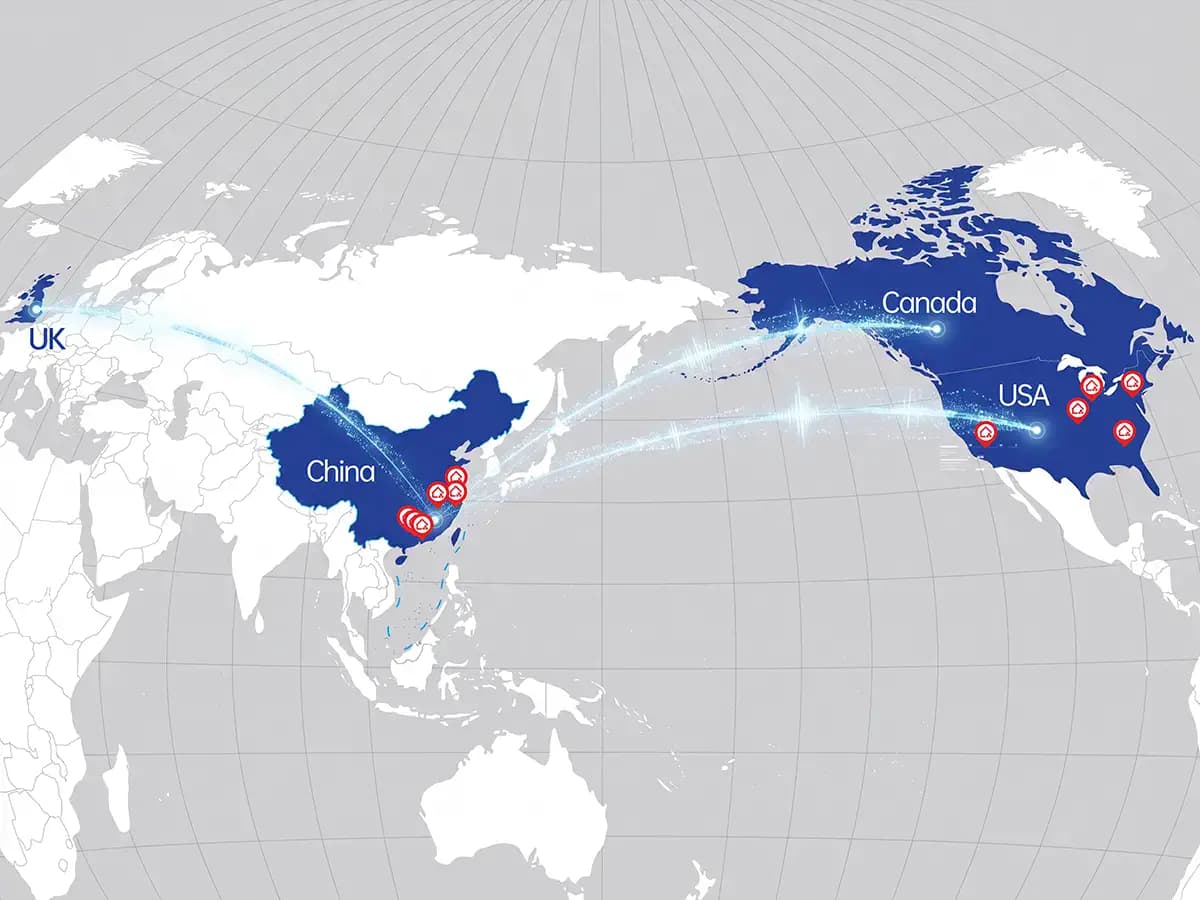
The two truths this guide is built on: (1) transit time ≠ door-to-FBA lead time, and (2) “delivered” ≠ “available to sell.” Get these right and you can plan a timeline you can actually schedule against.
Most guides answer “how long does shipping from China to Amazon FBA take?” with a single transit number — and that number is exactly why so many sellers run out of stock. The day your goods leave the origin port and the day your product is sellable on Amazon are two very different dates. The gap between them is where reorder plans quietly fall apart.
In our experience moving freight from China to FBA, the question worth answering isn’t “how fast is the boat?” It’s “when can I actually sell?” This guide walks the full timeline, shows where the hidden waiting hides, and turns it into a reorder decision.
How long does shipping from China to Amazon FBA take?
Quick answer: express courier runs about 3–10 days, air freight about 4–15 days, and ocean about 12–50 days port-to-port depending on coast and service level — but none of these is your sellable date. Once customs, the FBA appointment, and Amazon’s receiving are added, a realistic door-to-FBA lead time is closer to 6–8 weeks.
As a quick reference, here are typical transit ranges by method. These are port-to-port (ocean) or airport-to-airport (air) windows in normal conditions — not the date your product becomes buyable.
| Method | Typical transit (off-season) | Peak season adds | Best for |
|---|---|---|---|
| Ocean — US West Coast | Express ~12–20 days · standard ~25–30 days | +7–14 days | Bulk restocks, cost-sensitive |
| Ocean — US East Coast | Express ~22–30 days · standard ~45–50 days | +7–14 days | East-coast demand, heavy goods |
| Ocean — US Central (via West Coast) | Standard ~35–40 days (West Coast + inland) | +7–14 days | Inland fulfillment |
| Air freight | ~4–15 days | +2–5 days | Urgent restocks, high turnover |
| Express courier | ~3–10 days | +2–5 days | Samples, very urgent units |
Treat these as typical ranges, not guarantees. And remember: transit is only one slice of your real timeline. Customs, drayage, your FBA appointment, and Amazon’s receiving all stack on top — and together they decide your real in-stock date.
Transit time vs. door-to-FBA lead time
This is the single most important distinction in this guide.
Transit time is the headline number carriers and forwarders quote — the port-to-port or airport-to-airport leg. Door-to-FBA lead time is everything from your supplier’s ready date to the moment Amazon marks your inventory available to sell. Planning on the first number while your business actually runs on the second is the most common — and most expensive — timing mistake we see. If you’re still mapping the broader China-to-FBA shipping process, separate that end-to-end flow from the narrower timing question this guide answers.
The full door-to-FBA chain
A typical shipment passes through roughly ten stages:
- Supplier ready date / pickup
- Origin handling + booking (waiting for space or a flight)
- China export clearance
- Main transit — ocean or air (this is the “transit time”)
- Arrival and unloading at destination
- US customs clearance
- Container pickup / drayage / deconsolidation
- FBA appointment + queue
- Delivered (signed for at the Amazon facility)
- Receiving / check-in → available to sell
Only stage 4 is “transit time.” Stages 1–3 and 5–10 are where timelines slip.
Why planning on transit time alone makes you stock out
If you reorder based on a 30-day ocean quote, you’ve effectively assumed stages 1–3 and 5–10 take zero time. They don’t. By the time customs, drayage, the appointment queue, and Amazon receiving are added, a “30-day” shipment routinely becomes a 7–8 week lead time. Sellers who don’t budget for that gap reorder too late and go out of stock right when sales are climbing.
Worked example: 30 days of transit, ~52 days of lead time
| Stage | Example (days) | Notes |
|---|---|---|
| Production (before pickup) | 7 | Manufacturing — plan for it separately; not counted in the lead time below |
| Origin handling + booking | 3 | Pickup, consolidation, waiting for space or a flight |
| China export clearance | 1 | |
| Main leg — ocean (port-to-port) | 30 | This is the “transit time” |
| Arrival, drayage & deconsolidation | 2 | |
| US customs clearance | 5 | Longer if examined |
| FBA appointment + delivery | 4 | Queue for a receiving slot |
| Receiving: delivered → available | 7 | Delivered ≠ sellable |
| Total lead time (pickup → sellable) | ~52 | Excludes production |
The boat took 30 days. Your listing became sellable on roughly day 52. That is the number to plan around.
Shipping time by method: express, air, sea LCL, sea FCL
How long does ocean shipping from China to Amazon FBA take?
Ocean shipping from China to Amazon FBA typically takes about 12–20 days to the US West Coast on an express ocean service, 25–30 days on standard West Coast service, and roughly 22–50 days to the East Coast, depending on service level. LCL can take longer than FCL because consolidation and deconsolidation add handling time. These are port-to-port transit ranges — not the full pickup-to-sellable lead time. Customs, drayage, the FBA delivery appointment, and Amazon receiving still come afterward.
Each mode buys you a different point on the FBA shipping cost vs speed trade-off — but none of them skips the back-end stages above. The broader sea vs air decision for FBA shipments comes down to deadline, margin, shipment size, and risk tolerance; the question here is which mode is the fastest reasonable choice for your shipment, not the fastest in the abstract.
- Sea FCL (full container): the workhorse for bulk restocks and the best cost per unit once you’re shipping volume. Pick it when your in-stock date is far enough out to absorb the longest ocean window above.
- Sea LCL (less than container): flexible for smaller loads, but consolidation and deconsolidation add handling days on both ends — so it rarely lands as fast as the FCL range suggests.
- Air freight: the right call for urgent restocks and high-turnover SKUs, at a higher cost per kg — buy it for the main-leg days you save, not for a shorter back-end.
- Express courier: the fastest door-to-door option, but reserve it for samples and the few units urgent enough that cost per kg stops mattering.
The key mindset for this page: “fastest” is not the same as “soonest sellable.” Air freight saves you days on the main leg, but customs, your FBA appointment, and receiving still queue exactly the same way — so the gap between delivered and available doesn’t disappear just because you flew it.
What actually delays an Amazon FBA shipment
In our experience, most delays don’t happen on the water — they happen at the two ends. The four points that most often distort an ETA:
- Front-end slips: the supplier ready date moves, documents are incomplete, or a booking gets rolled to a later sailing.
- Customs hold or exam: a flagged shipment can sit for days.
- Prep and labeling: cartons, FNSKU labels, and prep requirements not done correctly means rework before Amazon will receive the goods.
- Split shipments / placement: Amazon may split a shipment across multiple fulfillment centers, and the appointment queue at receiving stretches the timeline further.
“Delivered” doesn’t mean “available to sell”
Here’s the most counterintuitive part of the timeline — and the one that catches even experienced sellers.
Delivered ≠ checked in ≠ received ≠ available
When tracking shows delivered, your goods have only arrived at an Amazon facility. They still have to be checked in, scanned, received into inventory, and made available before a buyer can purchase a single unit. Amazon’s own Seller Central documentation describes the same chain — checked in → receiving → Prime eligible — and notes units typically take 6–15 days to become Prime-eligible after arriving at the first fulfillment center, longer when they’re transferred between centers. The gap between delivered and sellable is Amazon’s official expectation, not an edge case.
How long the lag really is
Based on what we see across shipments:
- General range: ~1–14 days from delivered to sellable
- Off-season / normal: ~1–3 days (intake check 1–2 business days + item review 1–3 + shelving 1–2)
- Peak / promo periods (Q4, Prime Day, Black Friday): ~5–14 days, sometimes longer
- Occasionally a unit sits well beyond that — 10+ days, or still “in transit” between facilities long after it was signed for
How to square these with Amazon’s 6–15 days: Amazon’s official figure is a blended, all-FCs benchmark that bakes in transfers and Prime eligibility, while our ~1–3 day off-season number is a clean, single-FC intake-to-shelf case. In peak — or when units are transferred between centers — real-world lags climb toward and past the upper end, which is why seller reports of 10–24 days, or 3–4 weeks around Q4, aren’t unusual.
Where the hidden time comes from
- Split to many FCs: goods delivered to one region can be redistributed; large or split shipments can take well over a month to become fully sellable across all locations.
- Reserved inventory: a complaint or quality flag can move sellable stock to reserved while Amazon investigates — anywhere from a couple of days to over a week before it’s buyable again.
- Relabeling / compliance rework after arrival.
Plan a separate buffer for this stage
Because this lag is so variable, treat “delivered → available” as its own buffer line in your plan — never assume delivered means selling.
How customs clearance affects your timeline
Normal clearance typically runs ~1–3 days. A shipment pulled for exam or hold can add roughly 7–10 days on top.
Recently, customs scrutiny on the US West Coast has tightened, and categories like electronics, furniture, and textiles tend to see higher exam rates — treat this as a current trend rather than a fixed rule. Exams are most often triggered by vague paperwork, inaccurate HS codes, unusual declared values, or sensitive/battery-containing goods.
One 2026 change to plan around: the US ended de minimis — the old $800 duty-free exception — for all countries in 2025, so even low-value shipments now need a formal customs entry. That means more paperwork and a slightly higher chance of a clearance check, which can add time at the border. The duty mechanics live in our shipping from China to the US guide; here we only flag the timing impact.
Ocean shipments also need an ISF filing (Importer Security Filing, the “10+2”) submitted at least 24 hours before your cargo loads in China. File it late or inaccurately and the container can be held or fined — a pure timing risk, not a cost line. Keep it on your pre-departure checklist and confirm your forwarder or broker is handling it.
To keep this leg short: get your documentation clean and consistent, classify HS codes accurately, and make sure declared values line up.
Peak season, Chinese New Year, and Q4 delays
Timelines stretch predictably across the year. Based on our operations, the rough rhythm:
- January–mid-February: pre-Chinese-New-Year rush; factories race to finish, space tightens, rates spike. Book ~a month ahead.
- Late February–March: post-holiday lull — slow restart, lighter volume, one of the best-value booking windows of the year.
- May–mid-June: Prime Day and event stocking pull peak forward; space starts tightening.
- July–August: back-to-school and Halloween stocking; watch for typhoon-related port congestion.
- September–October: the year’s peak — Christmas and Black Friday stocking, high rollover risk; lock space early.
- December–January: a brief lull before CNY stocking begins again.
What breaks first in peak: space → port congestion → trucking → FBA appointments → receiving. The back-end stages are the last to recover.
How early to start: in peak, book at least 2–3 weeks earlier than usual (more for long-haul ocean), ship in smaller, more frequent batches to spread risk, and consider pre-positioning inventory to avoid unstable peak timelines.
How to plan your FBA timeline (and how much to reorder)
The fix for almost every timing problem is the same: plan backwards from your in-stock date, not forwards from your ship date.
Suggested buffer by scenario (on top of transit time):
- First order (new seller): the most buffer — documents, appointments, and receiving are all more likely to hiccup the first time.
- Routine restock: a moderate buffer once your lane is predictable.
- New launch / hard deadline (event, Q4): extra buffer; never cut it fine when a date is fixed.
- Peak shipping: layer the peak-season buffer from the transit table on top of your normal plan.
Then translate time into a reorder quantity:
Reorder quantity = ((lead time + review period) × daily sales) + safety stock − sellable stock on hand − units in transit
Most timeline guides stop at a days table. Tying lead time to an actual reorder number is what keeps you in stock — your reorder quantity depends on lead time, your review period (how often you actually reorder), daily sales, safety stock, and what’s already on the way, not just on transit time.
What to ask before you trust a shipping ETA
Whenever someone quotes you a number, pin down which layer they mean:
- Port-to-port / airport-to-airport (main transit only)
- Door-to-door (includes pickup and last-mile)
- Door-to-FBA (includes the appointment + delivery)
- Available to sell (includes Amazon receiving)
A quick checklist of what to ask a freight forwarder about ETA:
- Which layer is this ETA — transit, door-to-FBA, or available-to-sell?
- Does it include customs, the FBA appointment, and receiving buffer?
- Is peak season priced/timed separately?
- What’s your recent actual on-time rate on this lane — not the best-case sailing?
Planning a shipment? Send us your ready date, destination FC, and carton count, and we’ll give you a realistic ETA broken down by layer — transit, door-to-FBA, and available-to-sell.
The bottom line
The one move that fixes almost every China to Amazon FBA shipping time problem: anchor your reorder on the pickup-to-sellable figure, not the carrier’s transit quote. Get that habit right and you’ll restock ahead of demand instead of chasing it. Shipping time is only one leg of the whole journey — but it’s the leg that decides whether you’re actually in stock.
FAQ
Why is my shipment “delivered” but not sellable yet?
Delivered only means the shipment reached an Amazon facility; it is not sellable until Amazon checks it in, receives it, and makes the units available. In clean off-season cases, that can take about 1–3 days. In peak periods, split shipments, or FC transfers, plan for 5–14+ days, and sometimes longer.
Is air freight always faster to sell than sea?
Only sometimes — and the deciding factor isn’t speed, it’s how close your in-stock date is. Air earns its premium when you’re genuinely short on runway or moving small, high-value SKUs. If your timeline can absorb an ocean window, the delivered-to-sellable wait lands the same either way. Decide by deadline, margin, and stockout risk — not transit time alone.
How early before Prime Day or Q4 should I ship?
Book 2–3 weeks earlier than usual and add the +7–14 day peak stretch on top of your normal plan. Working backwards from your target in-stock date, that usually means starting ocean freight 2–3 months before the event or promotion.
What’s a realistic total timeline from China to first sale?
For ocean, plan for roughly 7–8 weeks from pickup to sellable in normal conditions — not the 30-day transit figure alone. The extra weeks usually come from origin handling, customs, drayage, FBA appointments, and Amazon receiving. Production time should be planned separately.
Can I make Amazon receive and shelve my inventory faster?
Not really — the receiving queue is on Amazon’s side. What you can control is avoiding delays: get FNSKU and prep right so nothing is reworked, follow Amazon’s placement instead of forcing one FC, send smaller batches, and arrive before peak when the queue is shortest.
Does Amazon’s own freight program (AGL) skip the queue?
Not exactly. Amazon Global Logistics lets sellers ship from China into Amazon’s network by ocean or air, but it does not remove the back-end steps: customs, FBA appointments, prep, receiving, and possible transfers still apply. Treat AGL as one routing option, not a guaranteed shortcut to sellable inventory.