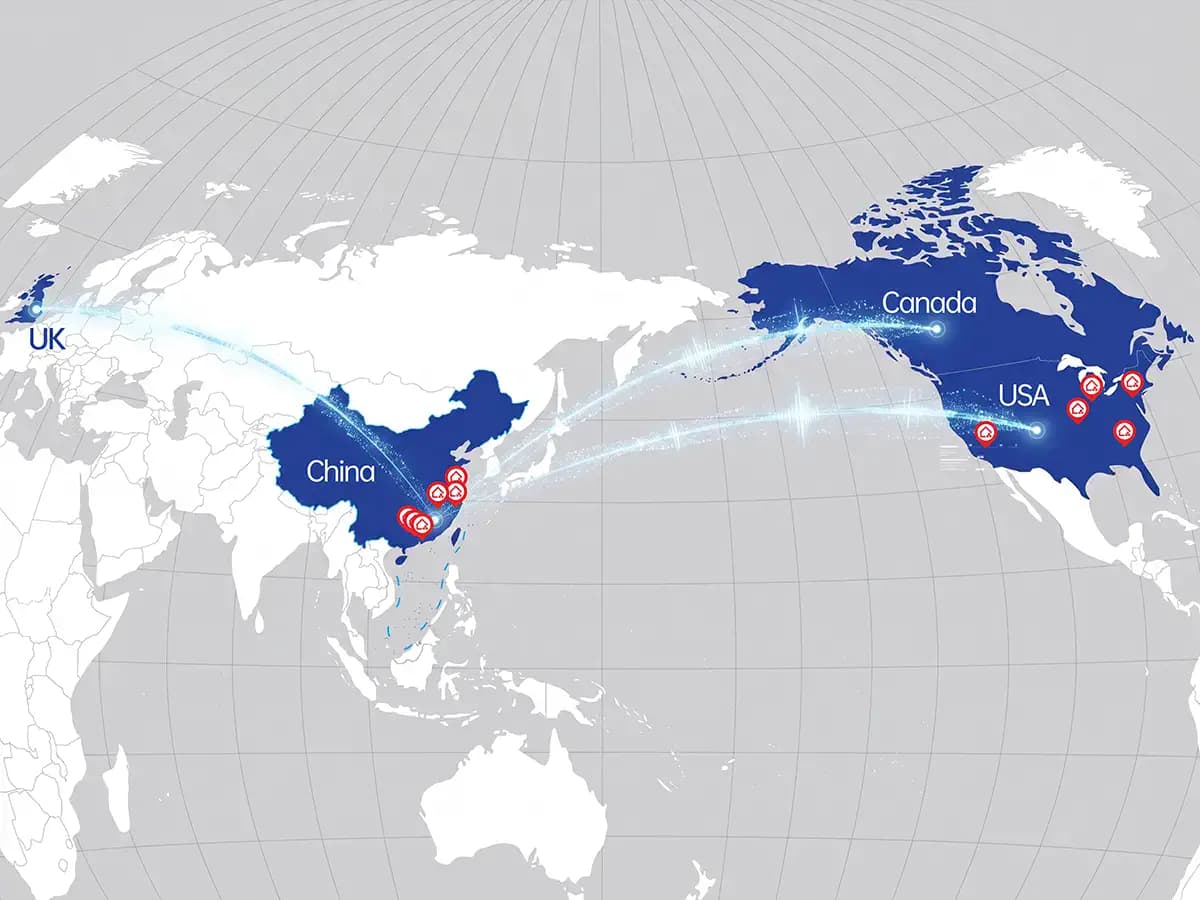
Incoterms for China Imports: The Short Answer
When a supplier in China quotes EXW, FCA, FOB, CIF, CFR, DAP, or DDP, the term determines who controls the shipment, who pays which costs, who handles customs, and when risk moves from seller to buyer.
For importers, the practical questions matter more than memorizing definitions:
- Who controls the freight forwarder?
- Which origin and destination charges are included?
- Who handles export and import clearance?
- Who pays duties and taxes?
- What happens if the cargo is inspected, rejected, delayed, or abandoned?
This guide explains the Incoterms China importers most often negotiate and helps you choose the right level of cost control, customs responsibility, and operational involvement.
What Are Incoterms?
Incoterms, short for International Commercial Terms, are trade rules published by the International Chamber of Commerce. They divide delivery, cost, customs, and risk responsibilities between seller and buyer.
An Incoterm helps answer:
- who arranges pickup and main freight
- who handles export and import clearance
- who pays duties, taxes, and insurance
- where delivery occurs
- when risk transfers
Incoterms do not automatically decide payment timing, ownership of the goods, product compliance, or whether every local charge is included in a quote.
The Incoterm tells you who is supposed to do what. The quote must still tell you what is actually included.
Which version? Most current quotes use Incoterms 2020. This guide focuses on the seven terms China importers most often negotiate: EXW, FCA, FOB, CFR, CIF, DAP, and DDP.
How to Choose the Right Incoterm for Your Shipment
The lowest supplier quote is not necessarily the lowest landed cost. Start with three questions:
- Who should control the freight forwarder? Buyer-controlled freight usually provides more visibility over freight, documents, destination charges, and problem-solving.
- Who can handle customs and duties? For U.S. imports, confirm the Importer of Record, customs broker, bond, ISF filing, and duty handling before shipment.
- Who is prepared to handle exceptions? Inspection, rejection, delay, storage, and abandonment costs often reveal whether a quote is truly complete.
Use this table as a starting point:
| Your situation | Better starting point | Why |
|---|---|---|
| First-time importer without customs or destination-side support | DDP | Can bundle freight, clearance, duties, and delivery when the cargo and customs setup are suitable. |
| Buyer with a broker, importer setup, and freight forwarder | FOB or FCA | Provides more control over freight, customs, insurance, and destination delivery. |
| Supplier only offers an EXW factory price | Ask for FCA or FOB | Reduces the China-side pickup, export-document, and clearance burden on the buyer. |
| Supplier offers CIF or CFR | Compare with FOB | Seller-arranged freight may reduce buyer visibility over insurance and destination charges. |
| Door delivery is needed but the buyer can clear customs | DAP | Seller arranges delivery while import clearance and duties normally remain with the buyer. |
| Sensitive, regulated, or difficult-to-classify cargo | Confirm acceptance before choosing | No Incoterm guarantees that a product is exportable, importable, or accepted by a shipping channel. |
China freight forwarder field note: In practice, the Incoterm itself is rarely the only problem. EXW quotes often leave export coordination unclear, FOB quotes may leave origin local charges and cutoffs undefined, and DDP quotes may not explain the Importer of Record or exception costs. Before comparing prices, first check the named place, customs responsibility, included charges, and what happens if the cargo is inspected or rejected.
Freight modes, lead time, customs, and last-mile delivery beyond Incoterms are covered in the full China-to-USA shipping process guide.
The Incoterms China Importers Actually Need to Compare
There are 11 Incoterms, but most China import decisions center on EXW, FCA, FOB, CFR, CIF, DAP, and DDP.
Sea-only vs multimodal: FAS, FOB, CFR, and CIF apply to sea and inland waterway transport. EXW, FCA, CPT, CIP, DAP, DPU, and DDP can be used for air, express, road, rail, sea, or multimodal shipments. A term such as FOB Shenzhen Airport is technically incorrect; use FCA or another multimodal term instead.
EXW: Maximum Buyer Responsibility
Under EXW, the seller makes the goods available at the factory or another named place. The buyer may need to coordinate loading, pickup, China-side transport, export documents, export clearance, main freight, import clearance, and delivery.
EXW can work for experienced importers with reliable China-side support, but it often creates problems for buyers who cannot coordinate export formalities with the supplier or an export agent.
Practical takeaway: EXW is not simply the cheapest term; it is usually the term with the most buyer-side operational work.
FCA: Buyer Freight Control with Seller Export Clearance
Under FCA, the seller handles export clearance and delivers the goods to the buyer’s carrier or another party at a precisely named place. The buyer can still select the forwarder and control the main freight.
FCA is often a cleaner alternative to EXW for air, express, multimodal, and warehouse handoffs. The named place matters because it determines where delivery and risk transfer occur.
Practical takeaway: If EXW gives the buyer too much China-side responsibility, ask whether the supplier can quote FCA.
FOB: Common for China Ocean Freight
Under FOB, the seller clears the goods for export and delivers them on board the vessel at the named port of shipment. The buyer normally controls ocean freight, insurance, import clearance, destination charges, duties, and final delivery.
FOB is familiar and workable for China ocean freight, but it does not automatically include every origin charge. Confirm the named port, nominated forwarder, local-charge scope, cutoffs, document process, and insurance boundary in writing.
The appointed-forwarder workflow, origin-charge breakdown, and cutoff risks are covered in the FOB shipping from China guide.
Practical takeaway: A clear FOB quote lists included and excluded China-side charges instead of relying on the term alone.
CIF / CFR: Seller-Arranged Ocean Freight
Under CIF and CFR, the seller arranges ocean freight to the destination port. CIF also requires the seller to arrange cargo insurance; CFR does not.
These terms can be convenient, but prepaid freight does not mean door delivery. The buyer may still face destination handling, delivery-order, broker, storage, demurrage, customs, duty, and inland-delivery costs. The buyer may also have limited control over the destination agent.
Practical takeaway: Ask who controls the insurance and destination agent and which destination charges are excluded.
DAP / DDP: Door Delivery with Different Customs Responsibility
Under DAP, the seller delivers to a named destination while the buyer normally handles import clearance, duties, and taxes. Under DDP, the seller also takes responsibility for import clearance, duties, and taxes.
The buyer-side decision matrix between DAP and DDP comes down to importer capability, customs responsibility, landed-cost visibility, and delivery experience.
DDP can reduce the buyer’s operational burden, but it does not guarantee product acceptance or compliant clearance. Before booking, confirm cargo acceptance, product documents, duty handling, the Importer of Record, and exception costs. A DDP-style shipment can still be rejected before export or held at import if the cargo or documents do not meet requirements.
A practical DDP shipping from China to the USA checklist should confirm cargo acceptance, customs documents, IOR setup, duty scope, and exception handling before booking.
Practical takeaway: Treat “DDP” as incomplete until the customs path, duty scope, IOR setup, and exception handling are confirmed.
Buyer vs Seller Responsibilities at a Glance
This table summarizes the practical groups above. For all 11 rules, see the dedicated chart page.
Looking for the full reference? The Incoterms 2020 chart covers all 11 terms, including cost, risk-transfer point, transport mode, and responsibility.
| Incoterm | Best for | Seller handles | Buyer handles | Risk usually transfers when |
|---|---|---|---|---|
| EXW | Experienced buyers with strong China-side support | Makes goods available at factory or named place | Pickup, export side, main freight, import clearance, duties, delivery | Goods are made available to the buyer |
| FCA | Buyers who want freight control and seller-handled export clearance | Export clearance and delivery to named carrier or place | Main freight, insurance, import clearance, duties, destination delivery | Goods are delivered to the named carrier or place |
| FOB | Ocean importers using buyer-controlled freight | Export clearance and loading on board at named port | Ocean freight, insurance, import clearance, duties, destination delivery | Goods are loaded on board the vessel |
| CIF / CFR | Supplier-arranged ocean freight to destination port | Export clearance and ocean freight; CIF also includes insurance | Destination charges, import clearance, duties, inland delivery; CFR insurance | Goods are loaded on board the vessel |
| DAP / DDP | Door-style delivery | DAP: delivery to destination; DDP: also import clearance, duties, and taxes | DAP: import clearance and duties; DDP: receiving and accurate product information | Goods are placed at the named destination, ready for unloading |
Compare Incoterms Side by Side
Choose the comparison closest to your shipping decision:
- [EXW vs FCA] — Compare factory loading, export clearance, named places, and China-side responsibilities.
- [FCA vs FOB] — Decide between carrier handoff and on-board delivery for air, multimodal, container, and ocean shipments.
- [FOB vs CIF] — Compare buyer-controlled and seller-arranged ocean freight, insurance, and destination charges.
- [DAP vs DDP] — Decide who should handle import clearance, duties, taxes, and door delivery.
- [Incoterms 2020 vs 2010] — Review the rule changes before using an older contract or supplier template.
- [Incoterms Chart] — Compare all 11 rules by transport mode, cost, customs responsibility, and risk-transfer point.
Hidden Costs the Incoterm May Not Show
An Incoterm divides responsibility; it does not guarantee that every charge appears in the first quote.
| Term | Costs or scope to confirm |
|---|---|
| EXW | Loading, pickup, China-side trucking, export documents, export clearance, and origin handling |
| FCA / FOB | Named handoff point, local trucking, warehouse or CFS fees, port charges, documents, cutoffs, and insurance start point |
| CIF / CFR | Insurance control, destination agent, THC, delivery-order fee, broker fee, storage, demurrage, and inland delivery |
| DAP | Import clearance, duties, taxes, broker fees, inspections, and delivery exceptions |
| DDP | IOR setup, duty differences, product compliance, inspections, storage, rejection, return, destruction, and post-clearance billing |
For U.S. imports under EXW, FCA, FOB, CIF/CFR, or DAP, confirm the Importer of Record, customs broker, customs bond, ISF for ocean shipments, HS code, duty estimate, and product-specific documents.
Quick rule: Compare the scope, not just the Incoterm or the first quoted price.
Common Incoterm Mistakes
| Mistake | What to do instead |
|---|---|
| Treating Incoterms as payment or ownership terms | Check payment timing and title transfer separately in the sales contract. |
| Comparing EXW, FOB, CIF, and DDP as product prices | Compare total landed scope, customs responsibility, and excluded charges. |
| Accepting EXW without a China-side export plan | Confirm loading, pickup, export documents, and clearance before ordering. |
| Assuming FOB includes every origin charge | Request an included/excluded local-charge list and confirm cutoffs. |
| Choosing CIF or CFR only because freight is prepaid | Confirm insurance, destination-agent control, and destination charges. |
| Assuming DDP guarantees that every product can move | Confirm cargo acceptance, documents, IOR, duty scope, and exceptions. |
| Ignoring import compliance | Identify the importer, broker, bond, filing, HS code, and product requirements. |
| Writing the term without a named place | State the term, precise place or port, and version, such as FOB Yantian, Incoterms 2020. |
What to Ask Before You Agree
Use this checklist before confirming a purchase order, proforma invoice, or freight booking:
- What is the exact Incoterm, version, and named place?
- What is included in the price, and what is excluded?
- Which origin and destination charges may be billed separately?
- Who appoints and controls the freight forwarder?
- Who handles export clearance in China?
- Who acts as the importer and handles import clearance, duties, and taxes?
- Is cargo insurance included, when does it begin, and who controls the policy?
- What destination charges should the buyer expect?
- Who pays if the cargo is inspected, delayed, rejected, returned, or destroyed?
- What product documents and compliance checks are required?

Need a quote check? If a supplier’s quote says EXW, FOB, CIF, DAP, or DDP but the scope is unclear, send us the quote. We can help identify what is included, what is missing, and where the customs or cost risk sits before booking.
FAQ: Incoterms for Importing from China
What is the easiest Incoterm for first-time importers?
DDP is often the easiest starting point because it can bundle freight, clearance, duties, and delivery. It is only reliable when cargo acceptance, product documents, the customs path, duty scope, and IOR setup are clear.
Is FOB better than CIF when importing from China?
FOB is usually better for buyers who want to control the forwarder, freight, insurance, and destination process. CIF can be convenient when the seller arranges ocean freight, but it is not door-to-door and may give the buyer less visibility over destination charges.
Does FOB include shipping to my door?
No. FOB ends when the seller delivers the goods on board the vessel at the named port. Ocean freight, insurance, import clearance, duties, destination charges, and final delivery normally remain with the buyer.
Is DDP safe for importing from China?
DDP can be reliable when the cargo, documents, IOR setup, duty handling, and customs filing path are compliant. It does not make a restricted or non-compliant product acceptable.
Which Incoterm is safest for the buyer?
There is no universal safest term. DDP can reduce operational work; FOB or FCA can provide more control and transparency. The safer choice is the one whose responsibilities, charges, customs path, and exception handling are clearly documented.
Do Incoterms include customs duties?
Only DDP normally places import duties and taxes on the seller. Under EXW, FCA, FOB, CIF, CFR, and DAP, import duties and taxes usually remain with the buyer.
Do Incoterms decide ownership of the goods?
No. Incoterms define delivery, cost, risk, and customs responsibilities. Ownership and payment terms are handled separately in the sales contract and applicable law.
Which Incoterm should I choose when importing from China?
A practical starting point:
- DDP when you want fewer moving parts and the cargo and customs setup are suitable.
- FOB or FCA when you have a broker, importer setup, and buyer-controlled forwarder.
- Avoid EXW unless you can manage China-side pickup and export coordination.
- Review CIF / CFR carefully if destination charges and insurance control are unclear.