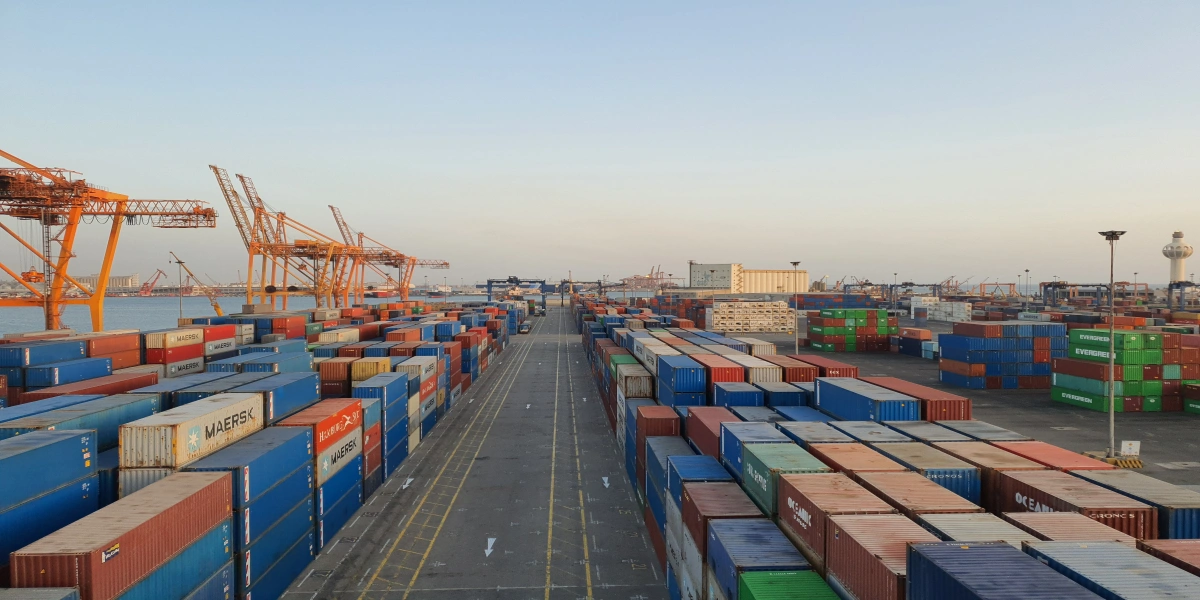
The ocean freight rate on a quotation is rarely the full cost of moving a container. A single shipment can also generate charges when the empty box is collected, when the loaded box enters the terminal, when customs opens it, when the vessel or booking changes, or when the empty box comes back late.
Many charge lists begin with abbreviations. This guide starts with the event itself, then identifies the resulting charge, the party that bills it and the party that usually pays.
Quick Answer
Container shipping charges fall into two families:
- Market-driven surcharges — BAF, CAF, GRI, PSS, THC, congestion. Set by carriers and terminals, move with fuel, currency, season and capacity, and apply whether or not anything goes wrong.
- Event-driven operational charges — pre-pull, drop-off, early gate-in, late receiving, re-handling, demurrage, detention, inspection handling, empty return. These appear only because something happened at a specific point in the shipment: a timing gap, a schedule change, an inspection or a delay.
The second family causes many invoice disputes, and several of these charges can be reduced with better timing and written instructions.
The Container Charge Map
| Charge | What triggers it | Charged by | Usually billed to | Avoidable? |
|---|---|---|---|---|
| THC (origin / destination) | Container handled through the terminal | Terminal, via carrier | Per Incoterm — often split | No, but check it is not double-billed |
| BAF / CAF / LSS | Fuel price, currency, low-sulphur fuel rules | Carrier | Freight payer | No — negotiable only in contract |
| GRI / PSS | Carrier rate action, peak season | Carrier | Freight payer | No — but timing of booking matters |
| Pre-pull | Container collected before the normal date or window | Depot / trucker | Whoever ordered the move | Often — confirm a virtual or later container number first |
| Drop-off | Loaded box placed outside the terminal because receiving has not opened | Trucker / off-dock yard | Shipper (export) | Yes — check receiving calendar before dispatch |
| Early gate-in | Loaded box delivered into the terminal before normal receiving | Terminal | Shipper (export) | Sometimes — apply for approval in advance |
| Late gate-in / late receiving | Box misses the normal cut-off but is still accepted | Terminal / depot | Shipper (export) | Sometimes — but it does not guarantee loading |
| Re-handling / shifting | Box moved, restacked or re-planned after a booking or vessel change | Terminal / carrier | Depends on cause | Partly — depends who caused it |
| Demurrage | Loaded or empty box stays inside the terminal past free time | Terminal, via carrier | Import side, per Incoterm | Yes — plan clearance and collection |
| Detention | Box kept outside the terminal past free time, before empty return | Carrier | Import side, per Incoterm | Yes — plan unpack and return |
| Inspection handling / devanning | Customs or authority orders a scan, opening or unloading | Terminal / CFS / inspector | Usually cargo interests | No — but the scope should be itemised |
| Empty return | Box returned to the appointed depot, or returned to the wrong one | Trucker / depot | Import side, per Incoterm | Wrong-depot costs are avoidable |
| Dry run, chassis split, waiting time | Truck arrives but cannot complete the move; chassis sourced separately; driver waits | Trucker | Import side | Largely avoidable with confirmations |
One Word, Two Meanings: Origin Side vs Destination Side
This is the most common source of arguments between Chinese suppliers, freight forwarders and overseas consignees. Several English charge names describe different operations depending on whether you are loading in Asia or delivering in North America.
| Term | In Asia (export side) | In North America (import drayage) |
|---|---|---|
| Pre-pull | Collecting the empty box before the terminal opens for receiving, sometimes to obtain a container number or meet an early documentation cut-off | Collecting the loaded import box from the terminal before the delivery appointment, to stop the demurrage clock |
| Drop-off | Placing the loaded box in an off-dock yard because the terminal is not yet receiving, then moving it in later | Dropping the loaded box at the consignee’s warehouse and leaving; the trucker returns later for the empty. The operation is usually called drop-and-hook. Some truckers use bobtail fee or drop fee for the related charge. |
| Early gate-in | Delivering the loaded box into the terminal before normal receiving, sometimes by prior approval | Not commonly used in this sense |
| Late gate-in | Box accepted after the receiving cut-off but still in time for the intended vessel (known in Chinese operations as 冲港) | Not commonly used in this sense |
Why this matters: a US consignee will usually read “pre-pull” on a trucking invoice as an import move to reduce demurrage. A China-based shipper may use the same word for early empty pickup before export receiving opens. Both usages exist, so the invoice should identify the operation and the party that requested it.
Market-Driven Surcharges (Short Version)
These apply regardless of how well the shipment is run, so check them at quotation stage rather than after arrival.
| Charge | What it covers | How it moves |
|---|---|---|
| THC / DTHC | Terminal handling at load or discharge port | Published by terminal, per container |
| BAF (Bunker Adjustment Factor) | Fuel cost | Adjusted monthly or quarterly, usually per TEU |
| CAF (Currency Adjustment Factor) | Exchange-rate exposure | Percentage of base rate |
| LSS (Low Sulphur Surcharge) | Compliance with low-sulphur fuel rules | Per container, route-dependent |
| GRI (General Rate Increase) | Carrier rate action on a trade lane | Announced in advance, temporary |
| PSS (Peak Season Surcharge) | Demand pressure, typically pre–Lunar New Year and Q3–Q4 | Can reach several hundred to over a thousand USD per box |
| PCS / congestion | Port congestion and berth delay | Activated by terminal or carrier notice |
| Documentation, BL, ISF/AMS, VGM | Bill of lading, manifest filing, verified gross mass | Per shipment or per filing |
| Special cargo | Out-of-gauge, overweight, reefer, dangerous goods | Per container, with surcharge on top of freight |
The rest of this guide covers the charges that appear because of what actually happened during the move.
Pre-Pull Fees
Export side (Asia): collecting the empty box early
A pre-pull on the export side means the empty container is collected from the depot before the terminal’s normal receiving window or before the standard pickup date.
One possible cause is a documentation timing gap: a filing deadline falls before the terminal opens for receiving, while the carrier or forwarder wants the container number early. For U.S.-bound cargo, confirm the Importer Security Filing requirements separately from the SOLAS verified gross mass requirements. The trucker collects the empty box, and it waits at a yard, the factory or on a chassis until loading and receiving open. Requirements vary by carrier and filing type, so confirm whether the number is actually needed.
The charge can include early pickup handling, temporary storage, extra trucking and, with some carriers, a carrier-side penalty for early equipment release.
Before you accept one, ask the carrier whether a virtual container number or a later number substitution is accepted. Some carriers allow the manifest to be filed without pulling the box early. That single question is often the difference between paying a pre-pull fee and paying nothing.
Also confirm:
- the approved pickup date;
- the terminal receiving date;
- the vessel and documentation cut-offs;
- whether free storage is included and for how long;
- whether truck waiting time is included.
Import side (North America): moving the loaded box out early
On the import side, a pre-pull is when the trucker collects the loaded import container from the terminal before the delivery appointment and parks it at the trucker’s yard.
It is used when the consignee cannot receive on the last free day, when the delivery appointment is early morning and the terminal queue would make a same-day pickup impossible, or when a weekend falls inside the free-time window.
A pre-pull moves the box out of the terminal before the delivery appointment. Leaving it inside may create daily demurrage, while moving it to a trucker’s yard creates a pre-pull charge and possible yard storage. Compare both costs against the delivery schedule.
Typical structure: a one-off pre-pull fee, plus daily yard storage until final delivery. Confirm whether the quote includes both.
Drop-Off Charges
Export side: the “落箱” yard move
On the export side, a drop-off happens when the truck arrives with the loaded container but the terminal is not yet receiving. The driver cannot hold the box on the chassis indefinitely, so the box is placed at an off-dock yard and moved into the terminal when receiving opens.
Costs can include temporary storage, an extra trucking leg, handling and a second movement. Pricing is set by the trucking company rather than by a published port tariff, so it can move sharply in peak season. Risk is also higher: the box sits outside the terminal.
Reduce it by checking the terminal receiving calendar, the appointment system and the vessel-specific cut-off before dispatching the truck.
Import side: drop and bobtail
On the import side, a drop-and-hook move means the trucker leaves the loaded container at the warehouse, unhooks and drives away, then returns later for the empty box. Some trucking companies call the related charge a drop fee or bobtail fee. Because the move normally requires a second trip, the quote may include an extra charge.
If your warehouse can unload within the free waiting window — commonly one to two hours — live unload avoids the drop fee and the second trip entirely.
Early Gate-In Fees
An early gate-in applies when a loaded container enters the terminal before the normal receiving window. Some terminals permit early receiving only with prior approval; others accept it and charge for the extra handling and storage.
Early gate-in is not the same event as pre-pull:
- Pre-pull = the container is collected early.
- Early gate-in = the loaded container is delivered into the terminal early.
The two can appear on the same shipment, because they describe two different moments.
Where early receiving is available by approval, apply before peak season, when quota is limited. Where it is not, the alternative is often a drop-off outside the terminal.
Late Gate-In and Late Receiving
A late gate-in fee or late receiving charge applies when the container misses the normal receiving cut-off but is still accepted by an approved terminal or depot in time to catch the intended vessel.
Common causes:
- a missed receiving appointment;
- late loading at the factory;
- customs or document delays;
- a truck arriving after the standard cut-off;
- special acceptance granted by the terminal.
The fee does not guarantee that the container sails. The booking, the terminal and the carrier must still confirm the box can be loaded. Paying the fee does not reserve vessel space.
Re-Handling and Shifting
A shifting or re-handling fee is charged when the container has to be moved, restacked or handled again. Causes include a vessel change, a booking change, equipment replacement, yard reorganisation, congestion, a change of loading plan, or an inspection that requires the box to be pulled out and put back.
This is the charge where responsibility matters most. The invoice should identify why the move happened:
| Cause | Who usually pays |
|---|---|
| Vessel or booking change by carrier | Carrier — dispute it |
| Wrong or late instruction from the shipper | Shipper |
| Customs or authority inspection | Cargo interests, unless a terminal error is proven |
| Yard reorganisation or terminal congestion | Often terminal/carrier — worth asking |
| Equipment defect or container swap | Carrier — dispute it |
Responsibility is frequently different from the party that paid the freight. Ask for the cause code before you pay.
Demurrage and Detention
English contracts distinguish between the two, even though one Chinese term (滞箱费) is often used loosely for both. For U.S. shipments, compare the carrier’s tariff with the Federal Maritime Commission’s demurrage and detention guidance.
- Demurrage — the container is still inside the terminal and has passed its free time.
- Detention — the container has left the terminal but has not been returned to the appointed empty depot within free time.
- Some carriers bill a combined demurrage and detention (D&D) figure, or apply a different daily rate after each deadline.
Check these dates on every import shipment:
- Discharge date or equipment release date.
- Last free day for demurrage.
- Pickup (gate-out) date.
- Last free day for detention, counted to empty return.
- Appointed empty return depot and its receiving hours.
Free time is not universal. It varies by carrier, contract, equipment type and port, and it can sometimes be extended on request — but usually only before the clock expires. Ask your forwarder to track the countdown rather than discovering it on the invoice.
Release, Inspection and Devanning
A local container pickup or release charge covers moving the box from terminal or depot to the truck, gate processing, appointment handling and release administration.
If customs or another authority orders an inspection, further charges can follow, and they are itemised differently:
- Scanning — X-ray or gamma scan, billed per container.
- Opening / devanning — unloading the container for physical examination.
- Re-stuffing — putting the cargo back after examination.
- Handling and haulage — moving the box to and from the inspection area.
- Storage during examination — charged by the terminal or CFS while the box waits.
Ask which of these actually applied. A “scan” should not be billed at the same rate as a full physical devanning, and inspection charges differ from the customs duty or tax that may follow.
Empty Container Return
Two situations generate this charge.
Import: the container is delivered, unpacked and moved back to the carrier’s appointed empty depot. Cost depends on distance, depot location, receiving hours and the carrier’s instructions.
Export: the empty container was collected but the cargo was never loaded — the order was cancelled, the goods were not ready, or the booking rolled. The trucker or carrier may bill the wasted movement, a cancellation fee or empty repositioning.
Always confirm the exact appointed depot, including its address and receiving hours. Returning to the wrong depot typically sets off a chain: the depot refuses the box, a second trucking leg is needed, storage accrues, and an equipment charge may follow.
Drayage Extras Worth Knowing (North America)
When shipping from China to the USA, importers arranging truck delivery will commonly find these charges on the trucking invoice rather than the ocean freight invoice:
- Chassis split — the tractor and chassis could not be matched in one move, so the driver made an extra trip to source a chassis.
- Dry run — the trucker arrived but could not pick up, because the box was on customs hold, freight hold or not yet released. The full trucking charge is often still billed. Confirm release and ISF status before dispatching.
- Waiting time — billed after the free window at the delivery point, usually per hour.
- Overweight / tri-axle — extra chassis or permits for heavy boxes.
- Yard storage — daily storage after a pre-pull, billed separately from the pre-pull fee.
Typical Cost Ranges
Read this as order of magnitude, not as a quote. The figures below are indicative ranges compiled from public carrier tariffs, port tariff notices and forwarder guidance. Actual amounts vary by port, trade lane, carrier, season and contract, and change over time. Confirm against the current local tariff before budgeting or disputing.
| Charge | Typical unit | Indicative range |
|---|---|---|
| THC (origin or destination, per container) | Per box | USD 100 – 500 |
| Documentation / bill of lading | Per shipment | USD 30 – 100 |
| ISF / AMS / VGM filing | Per filing | USD 30 – 50 |
| Demurrage | Per day, per box, escalating by tier | USD 50 – 250+ |
| Detention | Per day, per box, escalating by tier | USD 50 – 200+ |
| Pre-pull (US import drayage) | One-off, plus daily yard storage | USD 150 – 300 + USD 50 – 100/day |
| Drop-off / bobtail (US import) | Per move | USD 100 – 250 |
| Chassis split | Per occurrence | USD 50 – 125 |
| Dry run | Often close to the full trucking charge | 50 – 100% of the drayage rate |
| Early gate-in (China ports) | Handling + daily storage | RMB 150 – 225 handling, RMB 30 – 60/day |
| Re-handling / shifting | Per move | USD 50 – 200+ |
| Inspection handling | By examination type | USD 100 – 500+ |
| GRI | Per box, temporary | USD 100 – 500 |
| PSS | Per box, seasonal | Several hundred to USD 1,000+ |
Replace these with your own booked rates where you have them. Verified local numbers are more useful to a reader than any public range.
Who Pays: Incoterms at a Glance
Allocation follows the sales contract first and the agreed Incoterm second. The table below is a starting point, not a substitute for the written clause. Check the term and named place in your contract against the ICC Incoterms® 2020 rules.
| Charge | FOB | CIF / CFR | DAP | DDP |
|---|---|---|---|---|
| Origin THC, documentation, export clearance | Seller | Seller | Seller | Seller |
| Ocean freight and carrier surcharges | Buyer | Seller | Seller | Seller |
| Destination THC, delivery order | Buyer | Buyer | Seller | Seller |
| Import customs clearance, duty and tax | Buyer | Buyer | Buyer | Seller (but liability stays with the importer of record) |
| Demurrage at destination | Buyer | Buyer | Usually seller if caused by seller’s delay — check the clause | Seller |
| Detention and empty return | Buyer | Buyer | Usually seller | Seller |
| Inspection handling | Cargo interests, by local rule | Same | Same | Usually seller |
| Pre-pull / early gate-in / drop-off at origin | Seller | Seller | Seller | Seller |
With FOB shipping from China, a recurring dispute arises when the seller stuffs the container late but the contract puts destination charges on the buyer. Put the trigger in writing — “charges arising from late stuffing or documentation delay are the seller’s” — and the argument largely disappears.
How to Check and Dispute a Charge
- Ask what event triggered it. Every operational charge should map to one date, one place and one instruction. If no one can name the event, it is not yet a valid charge.
- Get the dates. Gate-in, gate-out, discharge, last free day, appointment time, cut-off. Most disputes are settled by a date, not by an argument.
- Check the unit and the tier. Per day or per box? Which tier did you reach, and from which day does it count?
- Check for double billing. The same movement should not appear as both a terminal charge and a trucker charge under different names.
- Establish who instructed it. If nobody on your side asked for the pre-pull, the drop-off or the early gate-in, say so in writing and ask for the authorisation record.
- Ask in writing, with a deadline. Carriers and terminals often have a dispute window. A request made within days succeeds far more often than one made after the invoice is paid.
Keep the booking confirmation, the terminal receiving notice, the appointment record and the email instruction. Those four documents decide most cases.
Pre-Dispatch Checklist
Confirm these in writing before the truck moves:
| # | Item | Why it matters |
|---|---|---|
| 1 | Empty pickup date, depot and approved pickup window | Prevents pre-pull and waiting-time charges |
| 2 | Terminal receiving start date and appointment rules | Prevents drop-off and early gate-in |
| 3 | Vessel cut-off and documentation cut-off (AMS / ISF / VGM) | Prevents late receiving |
| 4 | Whether a virtual or substituted container number is accepted | Can remove the need for a pre-pull |
| 5 | Last free day for demurrage, and for detention | Sets the countdown you must beat |
| 6 | Appointed empty return depot, address and receiving hours | Prevents wrong-depot costs |
| 7 | Customs inspection and scanning procedure, and who pays | Sets expectations on inspection handling |
| 8 | Whether origin and destination charges are inside the quotation | Prevents “all-in” surprises |
| 9 | Which party pays under the agreed Incoterm, per charge type | Prevents post-arrival disputes |
| 10 | Whether waiting time, storage, weighing, chassis and after-hours handling are included | These are the most common add-ons |
| 11 | What happens if the vessel, booking or terminal schedule changes | Defines re-handling responsibility |
| 12 | Who authorises extra moves, by name and in writing | Creates the audit trail for disputes |
A workable quotation should show the charge name, the triggering event, the billing unit, the free time, the responsible party and any rate tiers that follow. For DDP shipping from China, ask which routine charges are included and how inspection, storage or delivery exceptions will be billed.
FAQ
What is the difference between demurrage and detention?
Demurrage is charged while the container is still inside the terminal past its free time. Detention is charged while the container is outside the terminal and has not been returned to the appointed empty depot in time. Both can apply to the same shipment, at different points.
What is a pre-pull fee?
It depends where you are. In Asia, it may refer to collecting the empty export container before normal receiving. In North America, it usually means the trucker collecting a loaded import container early to reduce demurrage exposure. Check which operation the invoice refers to.
Does the AMS filing requirement automatically create a pre-pull fee?
No. A pre-pull may be considered when a filing cut-off falls before the terminal opens for receiving and the carrier or forwarder wants the container number early. Requirements vary by filing type and carrier. Ask whether a virtual container number or a later substitution is accepted; if so, you may avoid the early pickup and its storage.
Can I avoid a drop-off charge?
On the export side, yes, by dispatching the truck against the terminal receiving calendar rather than the factory's loading schedule. On the US import side, choose live unload if your warehouse can unload inside the free waiting window, usually one to two hours.
If I pay a late gate-in fee, is my container guaranteed to load?
No. Late receiving buys an opportunity, not space. The terminal, the booking and the carrier must still confirm the box can be loaded on the intended vessel.
Who is responsible for demurrage and detention?
It follows the sales contract. Under FOB and CIF, destination-side demurrage and detention normally fall to the buyer. Under DAP and DDP, they usually sit with the seller. Put the trigger and the party in writing at quotation stage, because the cause and the payer are often different.
Are these charge names standard worldwide?
No. The same operation can be billed as a terminal fee in one market, a trucking accessory in another, and under a local name in a third. Match the invoice to the local tariff rather than translating a term literally.


